Category Archives: Weapons

NORTH AMERICAN ARMS GUARDIAN .380.

NORTH AMERICAN ARMS GUARDIAN .380.

The NAA Guardian has long been one of my favorite little pistols. I have no specific reason to validate that bias… there are pistols out there that are a bit smaller. Some that are lighter. Some that are more powerful. In a race for first places, the Guardian doesn’t win any category firsts. Yet when you take in all the score averages, it comes in with the most points in my book.

Some guys might not like it because they think it might be too heavy. Or the trigger pull too long and too weighty. The slide might be too hard to pull back. The sights might be too hard to see. You know what? They are right. The Guardian has a way of turning negatives into positives. Let me explain. The sights are just about useless. They are too small and narrow to be effective. But this does not matter because the intended purpose of the weapon, they are not even going to be used. The slide is hard to cycle by hand because the gun uses a blow-back action. It isn’t an elegant system, but it is very reliable. As long as the ammo works, the gun is going to work. The trigger is long because it is a double action only design… which gives the gun added safety and simplicity of use. It is as simple to run as a revolver. It doesn’t need a safety lever to worry about.

Overall the Guardian is greater than the sum of it’s parts. When you are walking from your office out to your car late at night and parking lot looks spooky, you can feel that reassuring weight in your pocket letting you know that you are prepared. As you walk, you casually slip your hands in your pockets and your right hand slides over and around the grips. The cool steel whispers a comforting voice to your mind, “you will be okay.” Should a goblin appear, the snag free profile draws quickly and easily from the pocket holster. You don’t have to think about working the action or dropping the safety because the gun is always there for you, always ready. You might be scared and under stressed. Maybe your trigger finger is already on the trigger while you cover the potential assailant… under such stress a lighter trigger might be pulled all the way resulting in a negligent discharge. This happens to members of law enforcement sometimes… it could happen to anyone. With the Guardian’s longer pull this isn’t so much of a danger.

Should you have to fire, the .380 ACP cartridge is going to bark and snap and send out a 90 grain jacketed hollow point to deliver your cease and desist order. While a .380 isn’t the most powerful round out there, the Guardian’s 6+1 capacity will certainly make a convincing argument to the goblin that it picked the wrong victim. The Guardian’s magazine release is in the standard American position on the side behind the trigger… if you practiced, you can reload the pistol quickly. But by this time the Goblin could be laying on the ground bleeding out and you could be using your other hand to call 911 on your cell phone.

Of course all the above is a worst case scenario. But that is what we are all about… we hope for the best, but plan for the worst. A concealed carry gun like the Guardian is such a simple thing, like a seatbelt or a parachute. It can only do it’s job if you strap it on before you take off.

My last gun review I mentioned the shooting at Trolley Square in Salt Lake City. Since then we have had the shooting at Virginia Tech… Unlike at Trolley Square, there was no one at the scene armed with a concealed weapon. Had there been, the outcome could have been different. The body count could have been a lot less. Here is the clincher, there were people who had the concealed carry permits, but didn’t have the weapons on them. That was because of the Virginia Tech no weapons policy. That is the thing that bothers me the most. 30 victims died after the police were already on the campus. I’m not going to disrespect the police here, but I am going to say this: Personal Security is a Personal Responsibility. Remember that.

For that purpose you have to have your weapon on you at all times. You can’t leave it at home. You can’t leave it in your vehicle. You can’t leave it in your purse back at your desk. You have to have it on your person, and where you can access it without drawing attention to yourself.

This is where the Guardian comes into play. Carried in a pocket holster, the gun is invisible and you can look cool as a jewel as you stand there with your hands in your pockets, in about as nonthreatening a pose as you can be… yet be ready to instantly respond to a threat. In an inside the waistband holster tucked in behind your hip the Guardian is easily forgotten and unnoticed… but it is always going to be there for you.

As I mentioned in the first part of this series on the Ultimate Concealed Carry Gun I laid out some reasons for our selection of the Guardian as our gun of choice. Let’s review. We wanted a gun that was small. We wanted a gun that was solid. We wanted at least a .380 caliber. We wanted the highest quality while avoiding high premiums. We wanted reliability. After filtering all the gun industry’s products, the result was the North American Arms Guardian.

Let’s take a look at the internals. The Guardian doesn’t break down in the usual way. There is a small take down button on one side. Hitting that button allows you to lift the rear of the slide up and off the frame and then slide it forward off the barrel. Here is the interesting thing about the Guardian, the frame and the barrel are both one part. So you have the frame/barrel, the slide, and the recoil springs with that little weird spring plug.

I took my example apart and was struck by the bigger hammer approach that NAA used in the design. Even in the small parts there is a large dose of rugged built in. This is a sturdy little fellow. If the Guardian was a character from Lord of the Rings, it would be Gimli the dwarf. Small, tough, and full of attitude.

It was also a little rough. I used a new product called Ultra Blue by Microlon. The color is like the blue milk that Luke Skywalker drank in episode 3. Strange or not, it’s some really slick stuff. With a little bit if that blue stuff and some hand cycling, the Guardian smoothed out a lot.

During test firing, I ran through four boxes of shells with no problems. The reliability is there. As the saying goes, “accuracy is fine, but reliability is final.” I would have no problem packing this gun as a daily carry item. Even if it isn’t my main gun, it can always ride as a backup. In a pocket or on the ankle, it can always be there for me.

There are some things about the Guardian that I would want to change. Oh sure, the gun is fine as it is… but I want it to be better. I want NAA to deck it out as the “Vee Dub” commercials say “Pimp zee Auto.” I want it to be slicker. I want the edges to be melted a bit. And as always I want there to be tritium in the front sight post. I would also like something a bit more in the looks department. Dress it up a bit for me. Nice wood grips maybe, but those don’t contribute anything but pure cosmetics… but it would still be nice.

Even if it is a concealed carry gun, I want it to look cool. I don’t care if no one ever sees it. Like a tattoo under your clothes… you know it’s there.

The Guardian is a great starting platform for The Ultimate Concealed Carry Pistol… Let’s see what we can do with it and how it turns out.

Caliber: .380 ACP

Magazine Capacity: 6+1

Operation: Double Action Only

Material: 17-4 pH stainless steel

Barrel Length: 2.49″

Height: 3.53″

Overall Length: 4.75″

Width: 0.930″

Weight: 18.72 ozs. unloaded

Suggested Retail Price: $449.00

EAA Witness Compact 10mm:

EAA Witness Compact 10mm:

This review was published by Concealed Carry Magazine, for the photos that go along with this article, check out Concealed Carry Magazine.

SICK OF COMPROMISE:

The one thing that has always bothered me about Concealed Carry type guns is that they are all about compromise. You give up power for smaller size. You give up accuracy for a shorter barrel. You give up everything you really want in a handgun for the ability to have it on you all the time. Maybe I’ve grown cranky. Maybe I’m just fed up. Whatever the source of my feelings, I’m tired of compromises. I’m tired of shooting tiny guns that only make small holes, or dent paper. I want some raw horse power. I want some excessive force. And I want it with some decent accuracy, control and something that could get me through a knock down, drag out gun fight. A real gun. But it can’t be a 1911, and it can’t be a .45… or Tim would string me up with my own gunbelt.

SOMETHING DIFFERENT:

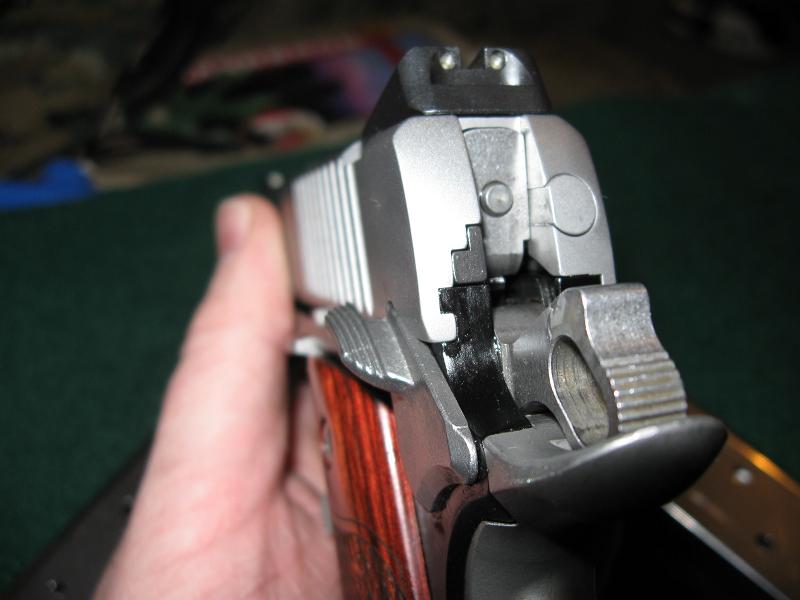
I was given the chance to “pick something” from the EAA catalog for review. Anything. Then shoot the hell out of it and see if it holds up. I’ve done 9’s and I don’t like .40’s all that much, and you are all sick of my gushing on .45 ACP. So I picked a Compact Witness in 10mm. This is an all steel, double action, 10 round, 10mm pistol with a 4 inch barrel, fixed 3 dot sights, and EAA’s “Wonder Finish”. The MSRP is only $450. That’s what it is, but it doesn’t really tell you guys what it really is. The gun is rather heavy for its size. Being that it is in a caliber with such potency, that weight is not a downside. The gun is in an intermediate size for being called a compact. I guess it is smaller than the full sized gun, but it isn’t really all that compact. The gun is thick through the grip so you can really hold on to it, but the length is too short to get all your fingers aboard. Even with the magazine’s finger extension, you still cant get your pinky to join the others on the gun. This might not be an issue for you out there with knuckles that are not swollen from arthritis. The Wonder Finish is an attractive finish that feels slick to the touch. It reminds me of NP3, for those that know what that is. As good looking as the finish is, the one thing I really like about it is that it is very easy to clean. After test firing all I did was spray it down with a little Hoppe’s #9, rinse that off with a little Hornady One Shot, then wiped it off. It looked clean as new and was slick as ever. Some Hoppe’s and a bore snake cleaned inside the barrel, and I put a little Tetra Gun Oil on the rails and sear and that was it. I was done cleaning in about 2 minutes.

THE CARTRIDGE:

This little beast is chambered for is something that most shooters are not familiar with. I showed it to a few guys, and they had never seen nor heard of 10MM before. (I know I live in the sticks, but there are good people here) So let’s review a little history. The 10mm was introduced in 1983 in conjunction with the Bren Ten pistol by the well known firearms house of Dornaus & Dixon… We all know those guys, right? No, me neither. All I know about them was that they had this pistol that was an epic flop. The famous Jeff Cooper was a huge supported of the Bren Ten, and the pistol was good. It just never caught on. I don’t know why. The cartridge is brilliant. It can be chambered in guns that you can chamber .45 in, meaning 1911 type guns. It offers a wide performance spectrum from target loads to deer hunting loads. You can go from 135 grain bullets at 1600 fps, to 200 grain bullets at 1200 fps. This gives you performance like no other auto cartridge… you want this sort of versatility in a more common platform, you will have to go with a .357 magnum or a .41 magnum because the 10mm is right in between those two. That’s a lot of power and flexibility that you just don’t find in your normal automatic pistol. Especially not an auto for concealed carry purposes.

In 1986 in Dade County Florida, the FBI got into a big shootout with a couple of baddies who didn’t fall over dead like they were supposed to. The Agents hit them repeatedly, but the baddies kept fighting, and Agents got killed. The FBI reevaluated everything about their side arms. They examined the calibers and the bullets and they added it all up. The answer was the 10mm.

Unfortunately for all the lawyers and accountants the FBI hires, the 10mm was too much for them. Too much recoil. So they downloaded the cartridge to mild levels. S&W said that they could do that in a 9mm length cartridge and put it into a smaller gun… and that’s how we got the .40 S&W cartridge, called the Short and Weak by those who had become used to the 10mm.

Looking back at this development, I can see that it was a good move and now most handguns are chambered in 9mm, .40 S&W, or .45 ACP. The downside is that the 10mm just fell out of the public eye. Today, it’s almost invisible. The gun store that I work at doesn’t carry 10mm ammunition, and we don’t carry any 10mm guns either. I drove out to SLC, Utah and stopped by every gun store that I knew of. It took all day, but I hit 9 shops. Only one of them stocked ammo, and none of them had a pistol. The one place that did have some ammo, only had 4 boxes. 4 boxes in a city of 2 million. I was discouraged. Fortunately there is the internet, and more ammo was ordered.

TIME TO SHOOT:

I didn’t want to shoot this gun alone… I wanted second opinions. Shooting Buddy Ben came with me one time, then The Travis came with me another time. We are all in agreement that the gun shoots very well, accuracy is more than acceptable, and the recoil isn’t just manageable, but enjoyable. Ben made a comment worth note, “The FBI couldn’t handle this? Sissies.

I agree. The 10mm out of an all steel gun is really not much more kick than a .45, and I once taught a little Japanese lady that weight less than two bags of dog food how to shoot a .45 and she did great with it.

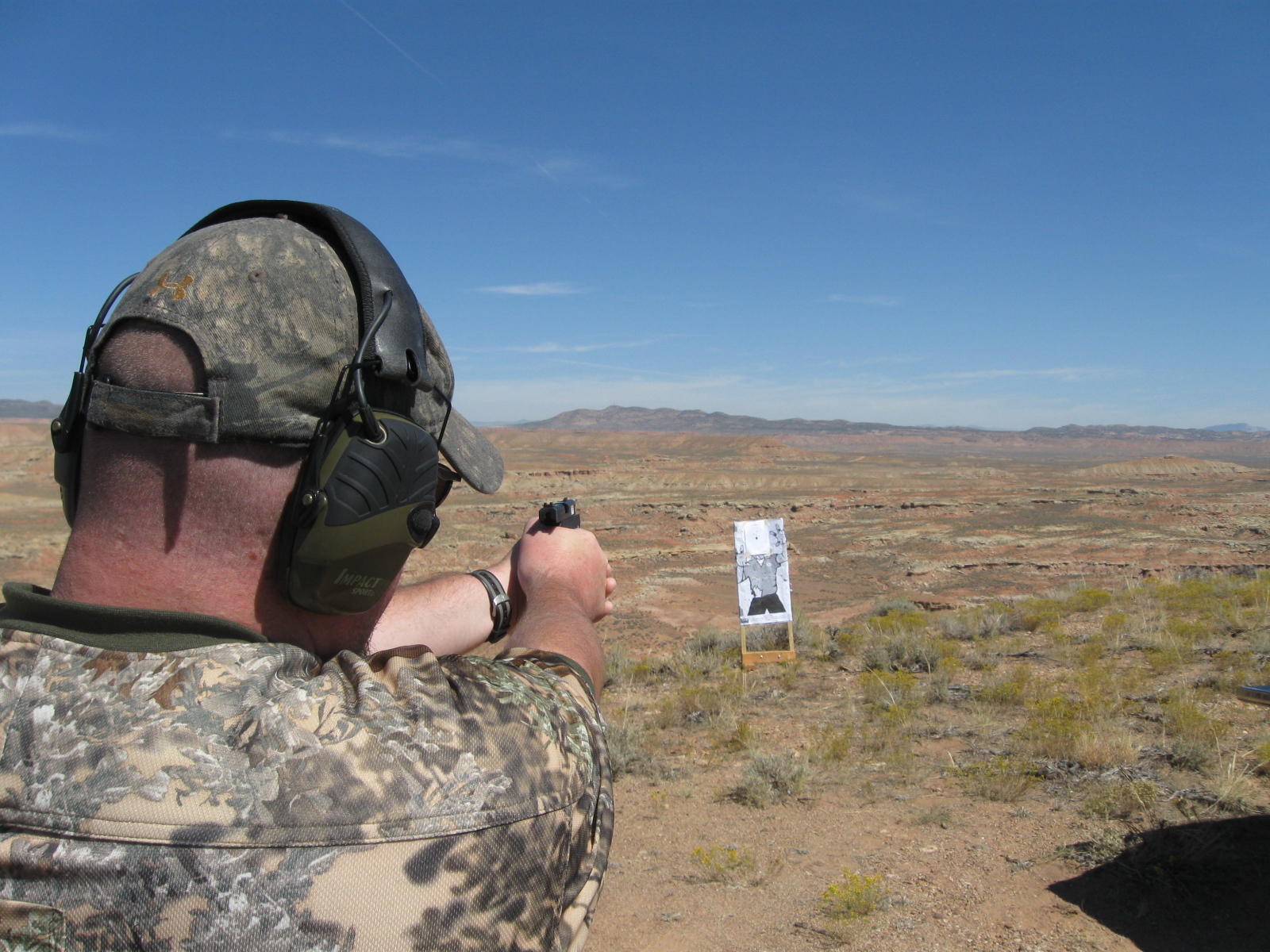
Ben and I decided to shoot at steel. The base plate of an abandoned oven is made of sheet metal thicker than most desert dwelling kitchen appliances. Ben had his trusted XD Tactical .45 that we used for comparison. The 5 inch barreled .45, shooting 230 grain FMJ Blazer Brass loads, punched through the metal, but pushed in a big dent before breaking through it. The EAA Witness 10mm with its 4” tube blasted through the same metal so easily that it looked like we used a Dewalt power drill. The penetration is incredibly impressive. You don’t see this sort of power from a gun you hide on your person.

We did find an interesting problem with the gun. EAA only sent us one magazine for the pistol, so I can’t tell if it’s a mag issue or an ammo issue. American Eagle 180 grain rounds would jam the gun on the second round from the last in the magazine – every time. This was a failure to feed as the round would stand up in the magazine and the slide close on that side of the cartridge. First thought was that this is obviously a magazine issue, but it only happened with AE 180’s. Norma, Buffalo Bore, Hornady, PMC, and Winchester did not jam.

The other thing that we all agreed upon was that the gun its self still needs a little work. The slide seemed to batter the frame pretty good, especially with the hotter Norma and Winchester loads. I think the spring is a bit too light from the factory, it could be two to four pounds heavier. The gun has some sharp corners around the trigger guard and muzzle. The front sight post is formed with the slide instead of dovetailed in like it should be. This means you can’t install night sights, or different sized posts to adjust the point of impact for different loadings.

CONCLUSION:

While the gun is good as it is… especially for the money. It could easily be better. You could take it from about a 7, to a solid 9.

The gun falls in a unique category in that it is big enough to not be as easily concealable as a compact, yet too small to be a target type gun. It needs to be optimized for our concealment purposes. Here is what needs to be done. First off, the sights. I know I always bitch about the sights on a pistol or hail them as needed. Sights and trigger are two critical things that can not be skimped on. EAA should have a guy in house to grind off the front sight post, cut in a dovetail, and put in Tritium night sights. That is a must for a gun to be taken seriously by me. Target guns and Defense guns need two different kinds of sights. Different purposes. This EAA Compact Witness is supposed to be a Defensive gun. The grips. The grip panels on the gun are good and… er… grippy. They help soak up the recoil a lot and make shooting this 10MM a joy. Unfortunately they are too thick. And the soft rubber allows fabric to cling, making the gun print too much. In my attempts to conceal this gun, I found that it printed too much under just light shirts like what I like to wear in warm weather. You would have to wear a sports coat over this thing to keep it hidden. I suggest to get rid of the grips and use thin profile aluminum grips from Hogue. This would slim down the profile a great deal and make packing CCW much much easier. The finger rest on the magazine is another thing. The gun is too short for a 3 finger grip, and the finger rest doesn’t help me one bit. Go ahead and let the pinky swing free on this one, and let the gun be just that much shorter for concealment. Now for the biggie. I’ve not tested a handgun that BEGS for a Melt Job more than this Witness. It has sharp edges on its sharp edges. The front of the gun has the full length rails that extend to the muzzle, all they way past any point of being useful, straight to being irritating. If this was taken to a belt sander for about a minute and a half – it would be brilliant. A custom gunsmith should be able to do this to your gun with very little effort, but with huge returns. Of course then he would have to refinish it and you would lose the Wonder Finish – which even EAA can’t tell me what it is. One last thing. The gun needs a recoil spring about 2 pounds heavier. Wolff Gun Springs can fix that one with no problem.

Considering the price of a new EAA Witness… having this work done to it wouldn’t be out of the realm of reasonable when you take into account what you would then have in your hands. A concealed carry gun that makes no compromises.


The Thirties

One of my least favorite things at the gun shop is when some guy who we don’t know, sends in his wife who we don’t know, to buy some “300”. We don’t know the people, so we don’t know which 300 the guy might have. 300 generally means a .30 Caliber of some sort and well, there are too many common options to just pick one. During hunting season, this happens on a regular basis. So guys, if you do send your girl into town to pick up a box of ammunition – do your wife a favor. Rip off the end tab of your last box of ammo and send that with her so the guys at the gun store know exactly what you need, and we don’t think of you in a less than flattering manner.

Let’s look at some of these 30 cal cartridges. There are 10 different common 30’s. Each one has its own strengths and weaknesses.

The .30-30 Winchester. The Thirty really started as a market success with the .30-30 Winchester. This was the first serious high velocity metallic cartridge using smokeless powder. It was a hot rod back in its day. Shooters were amazed. These days, the .30-30 is often scoffed at by those that don’t get it. Personally, the .30-30 remains a favorite of mine. It’s mild, yet potent enough to take down an elk at 200 yards. Typically it fires bullets from 150 grains to 170 grains, at moderate velocities from 2250 FPS to 2400 FPS. Accuracy is average to pretty good from most rifles. Most of which are lever action rifles with open sights. The best I’ve ever seen a .30-30 do was half inch groups at 100 yards in a rifle that had about 250 bucks worth of gunsmithing to tune it for better accuracy.

The .30-06 Springfield. This is the classic .30 caliber cartridge that America has used all around the world fighting for our freedom. The Aught Six as it as loving called, has fathered more offspring cartridges than anything else. Most notable is the .270 Winchester, which has become the second most popular cartridge according to nationwide sales… but that is another story. The Aught Six fires bullets usually between 150 grains to 200 grains, but there are loads out there going lighter or heavier… I’ve seen them as low as 110 grains and as high as 225 grains. Velocity is high, but remember, this is not a Magnum cartridge. Velocities are typically centered around 2800 FPS. Accuracy is very good, but could be better because the case has a lot of wasted space in it, reducing the efficiency of cartridge and allowing for less consistent powder burn. This cartridge went to war in WWI in our bolt action Springfield 1903 rifles, then into WWII in our M1 Garands, and into Vietnam still in our 1903 Springfields that were accurized and scoped and used as sniper rifles. Because of the shear number of surplus rifles on the market, and because of the almost universal acceptance, use, and general fondness of this cartridge… it has become the Number One cartridge in America for overall sales. Still today, it remains the Top Dog. Every company that makes a rifle, makes one in .30-06. There are those that love it with a passion, and there are those that don’t really like it… but no knowledgeable shooter disrespects it.

The .308 Winchester. After WWII, the M1 Garand was altered and the action was tweaked to fire from a detachable box magazine. This needed a cartridges that was shorter for better feeding. This is where the .308 Winchester came to the spotlight. This gives us almost the same performance of the .30-06, but does so with greater efficiency and thus better overall accuracy. Again, like the Aught Six, the Three’oh’eight fires rounds from 150 grains to 180 grains like most of the .30 cals going on… but does so at about 2700 FPS, which is only about 100 FPS slower than the Aught Six.

The .300 Savage. This one goes back to 1921 and was the first “300”. It was hugely popular for a time, and chambered in Savage’s strange yet good model 99 lever action. It’s a bit shorter than the .308, and milder, pumping out 150 grain loads to a pleasant 2630. You can bump up the loads to 180 grainers, but the speed drops off a bit too much I think. So while it’s a lighter hitter than the .308 and a harder hitter than the .30-30, it occupies a comfortable place in that middle ground. It very well could be the ideal .30 caliber for light carbines. Imagine a Model 7 Remington in this cartridge… that would be great combination. The round is very accurate and just a pleasure to shoot.

The .300 Winchester Magnum. In 1963 gun makers decided to go big in terms of velocities. Winchester hit the home run with the .300 Win Mag, and its the ballistic equivellent of the Mona Lisa. A work of art. And a work by which all other .30 caliber magnums are compared to. It’s powerful and has a strong kick to it, but not too hard as to be punishing. In a full sized rifle, it is quite manageable. You can load a 180 grain bullet up to 3,000 FPS… a dramatic increase in horsepower. People just call this round “The Win Mag” and most everyone knows exactly what you are talking about.

The .300 Remington Ultra Mag. Remington had to do something big, so they came out with the .300 Remington Ultra Mag…. or the .300 RUM as I like to call it. This cranks to the same slug as the .300 Win Mag about 250 to 300 FPS faster and hitting harder by about 600 foot pounds of energy according to typical load data. This cartridge is a dragon slayer. There are some out there that are hotter, like the .30-378 Weatherby magnum, but not by much. If a scope is going to get bucked off a rifle and break mounts and rings – most likely the gun is going to be a .300 RUM. Around where I live, we call these “Elk Cannons” and we sell a ton of them. For long range knock down, this has it. The .300 RUM can body slam an Elk at a thousand yards.

The .300 Winchester Short Magnum. When this one first came out a few years ago, I scoffed at it. “Same ballistics as a .300 Win Mag? What’s the point?” Well, what it gives you is that classic Win Mag power, but it does so with greater accuracy and with about 20% less felt recoil. I set up two rifles exactly the same… Synthetic stocked Weatherby Vanguards, using the same rings and bases I mounted the same scopes on each. The only difference was that one was a Win Mag, the other a Short Mag. The Win Mag kick was tolerable, but after 10 rounds I was done shooting it for the day. I shot a sub 1 inch group with it and it was great. Reaching out with that much crushing power, that is a lot of violence to focus into a inch. Then I shot the Short Mag. I shot a one hole group, and it was actually fun to shoot. Less recoil enough to shoot all day… I ran out of bullets for it. Same speed, greater accuracy, less recoil… this round has no downsides. Marketing didn’t come up with this round like I thought… this is ballistics engineering at its finest.

The .300 Remington Short Action Ultra Mag. Remington wanted to do something in a Short Mag type platform and they came out with the Short Action Ultra Mag… and it flopped. It’s a decent round, just a tick behind the .300 WSM, but it does so in a slightly shorter length, allowing it to be able to be used in .308 length actions. This allows us to make AR-10/SR-25 type rifles that hit like a .300 Win Mag. To me, that makes it a winner. I think this is just about the perfect cartridge for military applications in GPMG’s (General Purpose Machine Guns such as the M-60 and M-240). The US Military wants more power? Here it is. Take our current crop of .308 caliber SR-25 sniper rifles and rebarrel them to .300SAUM… presto. While I think the SAUM has it’s place, it is a commercial flop. The WSM beat it, but I think this is more of a perception matter than performance. People hear “Ultra Mag” and they want a dragon slayer, not just another Win Mag Mirror. I think Hornady could lend a hand and blend some powders and do their alchemy and come up with a Heavy Mag load for the .300 SAUM and it would then enjoy a ballistic advantage… But that is neither here nor there.

The .30 T/C. With the trend for making all things short and chubby, someone had to do it… so TC did. They made a .30-06 Short Mag. This cartridge mirrors the classic .30-06 ballistics. But it is more than that. It does so in a shorter, more efficient case. It’s the same length as the .308 Winchester but a touch chunkier. It is of course more accurate thanks to the greater efficiency. It also does two things that we are going to take as a bonus. It has less felt recoil, and it’s actually faster than the Aught Six by a few FPS, and in some loads up to 100 FPS faster. Not much… and nothing to make me want to run out and buy a new rifle in this caliber. It’s a like a hot handloaded .308, and in my opinion nothing more. TC brags that it’s the first cartridge with the TC head stamp, and that’s fine. Bully for them, but I’m thinking it’s rather un-needed. Now if they had taken this chunk of brass and necked it down to a 7mm, 6.5, or a .25 caliber – maybe we would talk.

The .300 RCM. The RCM stands for Ruger Compact Magnum, and in the same 24 inch barrel, it’s a clone of the .300 WSM. The RCM uses a different powder blend and gets up to speed quicker, meaning it works in shorter 20 inch barrels. I guess that’s nice. For guys guys that want short barreled Magnum rifles… all three of those guys should be happy with the .300 RCM. I have to be honest here, these last two rounds, the .30TC and the .300 RCM… the .30 caliber market is crowded enough and good, proven, classic calibers are being pushed out by these new rounds that do things slightly different. Yes, yes, yes, it’s accurate. But so was the .300 Savage. I don’t see a place for the .300 RCM in the future, and I think the .30T/C is going to die out as well, rather sooner than later. But that’s just my prediction. Who knows. It could really take off like the .300 WSM did. Now, Ruger has a version of this cartridge in .338… the .338 RCM and that has some serious potential there. I like that idea, but in the .300 class, it’s like just another boy band. We’ve heard that tune before and looks the same as the others.

If I was to pick a new .30 caliber round for all around use, I’d pick the .300 WSM. It does everything right, and nothing wrong. As a beer commercial once said, “Tastes Great, Less Filling”.


Charles Daly D-M4EL Carbine.

Charles Daly D-M4EL Carbine.

(For the photos and videos related to this article, check them out as originally published on Old Mad Ogre, HERE)

I have a friend named Bax. He’s a former Jarhead, opinionated, somewhat self-aggrandizing, but smart. He keeps me honest. Around me, it just seems the subject of AR-15 rifles just swirl like radioactive fallout in a breeze. This dust is of my own making, as I nuked the AR-15 platform in one of my articles. While it is true that I do hate the AR-15 for many reasons, I also love it for many others. There are strong points in its favor and I have some AR-15’s for those reasons.

In the middle of yet another AR-15 discussion on WeTheArmed.com, the subject of Charles Daly came up. I dismissed Charles Daly off hand because of previous experiences with CD products that left me disappointed. I generally operate on the Fool Me Once principle, so I had no interest in exploring another CD product.

Bax however, was insistent and somehow got Charles Daly involved. Mr. Kassnar himself, President of Charles Daly stepped up and offered a CD rifle for defense. To clarify, Charles Daly’s Defense division, CDD has the AR line, and it was a CDD rifle that was send to me. A straight forward M-4 clone, no frills. On the CDD web page, it’s the second one from the top.

The Specs. Item No.: CCDM4E16. 5.56mm Nato, 16” Barrel, 1×7 ROT, MSRP $1309.00USD. Flat top, with removable carry handle. Fixed front sight. 6 position collapsible stock. Chrome lined 4150 barrel, M-4 feed ramps, M-4 fore end.

When the rifle came, I was expecting it to be at the Bushmaster/Armalite level, meaning typically Milspec and rough. But I was pleased to see that it was much better than that. I am a critic by nature, and if there is something to criticize, I am inclined to do that. I was batter up at the plate ready to swing and knock this rifle over Bax’s head. I felt deflated. It looked good. It felt good. It didn’t have any “cheap gun” rattles. It didn’t have a grind in the action like cheaper AR rifles do.

In fact, it looked just like a Rock River. I had a Rock River on hand in the exact same set up, so I compared them side to side. It was like I was looking at twins.  However the Charles Daly had an advantage.  The gas key on the bolt carrier is staked securely while the Rock River was not.  This is an important detail for a heavy duty use gun.  Other than that, they were virtually identical. 

Well, not quite.  The CD gun was better looking. The exterior finish was cleaner, blacker, and smoother. It honestly looked better. Felt better to.

I had to shoot it. We had got in some new optical gunsights. One is called the ISM-V from Insight Technologies. It had to be tested out too, so this looked like a good match up. I mounted the optic, gave it a quick bore sight and hit the range.

Because most of the interest in this gun was from online sources, I wanted to break away from normal article tradition, and take some video to post on YouTube.

The first time out with the CDD, I noticed the only real complaint that I could find. The trigger was typical MilSpec. This means it was a touch heavy in the second stage with a little creep and a little grit. Not bad, just completely average. No better and no worse than any other trigger for this type of rifle at this price range. We didn’t have much time, but Marcus, a co-worker and I blasted through a couple mag fulls. The gun shot quite well and was easy to hit with… typical of the AR type. Nothing out of the ordinary and we experienced no jams. And this was just right out of the box. Box to Range. No cleaning or lube.

ROUND COUNT: 150.

To do this right and to give this gun a fair shake, I had to give it a cleaning and while doing so, examine the internal parts. The internals looked as good as the externals. No shortcuts, no hidden problems or skeletons. Just good quality parts that were built right.

I cleaned the weapon using a new CLP product branded by Smith & Wesson, made sure every part was properly lubed, and reassembled it. This was the only cleaning I did on the gun until the completion of the evaluation. However I did lube it along the way, using Tetra Gun Oil on the bolt and bolt carrier. That was it.

ROUND COUNT: 560

Not wanting to review the optic and focus just on the gun, all subsequent shooting was done with the gun’s carry handle attached and just used the iron sights. However it must be said that this ISM-V is a great choice for a combat red dot type sight. It co-witnessed with the front sight perfectly and allowed you to use the optic as a ghost ring sight for fast close range shooting.

Extending the shooting range further and you can use the optic as advertised. The accuracy was exceptional. Very consistent. As was the ejection. Unlike most AR-s, the CDD spit out all the brass in about a 4 foot area. Better than the typical 8 foot area of most AR builds.

ROUND COUNT: 880… no video.

One of the things I am interested in when it comes to weapon, is can they actually be applied to work.  I have to tell you… yes.  Since I don’t have a supply of Iraqi Insurgents to deal with, I have to find an alternative.  We do have coyotes out here and I was able to test the CDD rifle on a couple of them.  From the back of the truck into firing position, the CDD performed well.  From spotting 3 coyotes, I was able to put 2 of them down cleanly and quickly.

I did have one failure with the rifle, and I’m going to take that on the chin and admit it was Operator Error. I didn’t have the magazine seated properly, so when the weapon fired the first round, the magazine fell so it couldn’t feed the next one. That was my fault, and not the weapon’s. That being said, the functioning of the gun has been flawless. Again, this is something I was not expecting and was even hoping it would be otherwise.

When I benched the rifle, it was a very cold day. Not quite warm enough to keep me from shivering slightly. But it was still accurate enough to shoot under an inch. Open sights on a frosty, foggy day when I couldn’t even see the target clearly through the fog – I’ll take that accuracy happily. I bet on a warm clear day, that group could have been shrunk by half.

ROUND COUNT:  1000

I’m giving this rifle a 9 out of 10. It loses points for the trigger, but everything else was solid.

Next time, Bax.  You are buying the ammo.

For article discussion relating to this rifle, see the thread on WTA.

Thank you to Mr. Kassnar of Charles Daly. 

The SIG GSR 1911 C3:

The SIG GSR 1911 C3:


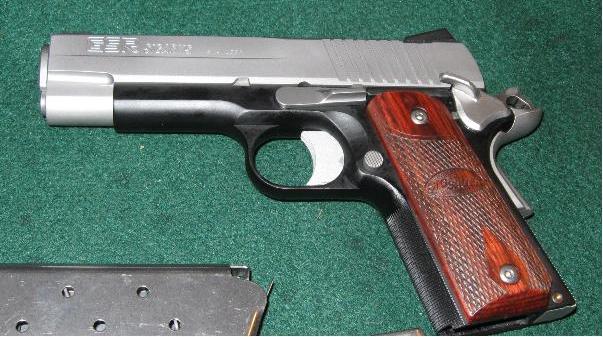
What can I say? I had to have it when I first saw it and I’ve been working on getting one for a long time… today was the day it came home with me. Sexy little minx, the C3. The C3 is SIG’s answer to the CCW question. Colt used to make a pistol called the CCO, a gun that I have always wanted since I first saw it. Then Colt dropped it because Colt is run by a pack of useless idiots with balls slightly smaller than your average sun-dried raisins. Well, SIG, being smarter than the average bear, is making their own flavor of the CCO concept. Commander length barrel on top of an Officers sized frame. This is, and I am not saying this lightly – the PERFECT concealed carry combination.

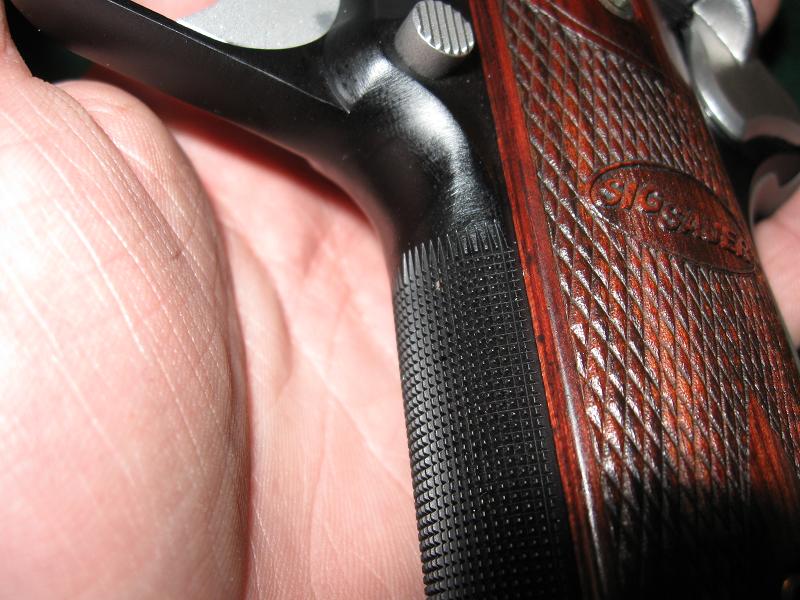
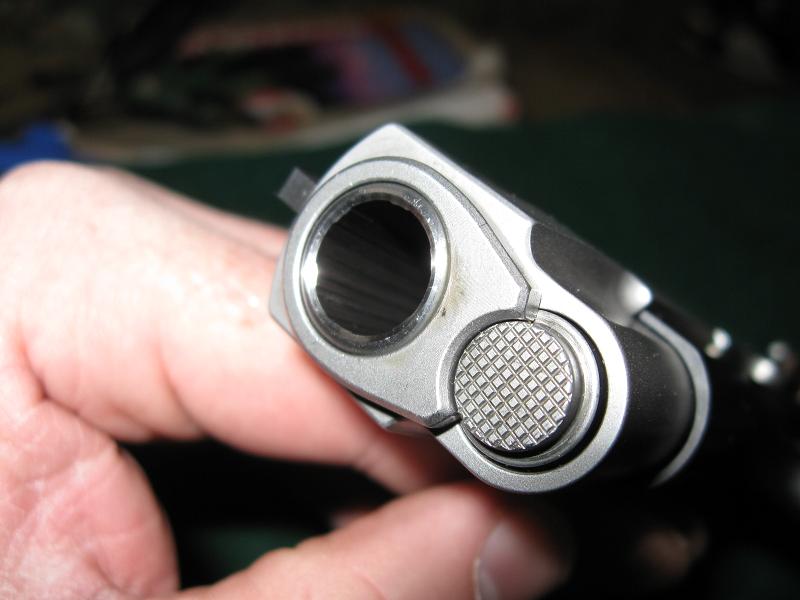
You know how I’ve said that Kimber makes “one of the best” production 1911’s out there? Yeah, well SIG is the other part of that equation and they do make The Best production 1911 out there. I’d like to see some top gunsmiths make some top end customs based on the SIG GSR’s. In the photos, take a close look at the frame to slide fit. No, scratch that… Go to a stocking SIG dealer and look for yourself with your own eyes. To get better than that, you are going to have to buy a full house custom built gun for at least double the money… and even then I really don’t think you can get better than that. Not when you are talking Stainless and Aluminum… now if you were doing a solid steel gun with the same steel on the frame and the slide – maybe it might look tighter, but you can’t actually make it any tighter. There is ZERO play in this C3’s frame to slide fit. There is no play in the barrel.

Kimber still makes some great handguns, don’t get me wrong. I’m still a huge fan of Kimber’s Tactical series. But SIG’s GSR’s? They’ve taken it up a notch. The reason I got the C3 was that I wanted a good compact 1911, but I wasn’t quite sold on the Ultras… It’s the Bushingless Bull Barrel that turned me off. The C3 has a Bushing. It has a GI type follower… no full length guide rods… no paper clips required to take it down… no gimicks or bullshit… just a solid 1911 the way John Moses Browning would have approved of. Say hello to my new daily carry gun. To get better than this – I’d have to buy a Wilson Combat or a Nighthawk Custom.

Shooting the C3, I couldn’t be happier. It’s A+ on the Accuracy Score. Even out to 50 yards, it was precise. Reliability is exactly what you come to expect with SIG, meaning it was flawless. Yeah, you can say I’m a hard core SIG fanboy now. So what do I think is better, the SIG or the Kimber? Read this post again. The SIG’s don’t use plastic mainspring houses, let’s just leave it at that.


The Zen Of Handgunning

The biggest mistake novice pistoleros make is a simple matter of forgetting the basic fundamental skills. For some reason, they can tell you what it takes to shoot, but when they draw the weapon, it all goes out the window. For me, the biggest reason I enjoy handgun shooting is that it is more of a challenge. What makes it challenging is that handgunning is a whole person event. You can’t half-ass a pistol shot. It takes a combination of body and mind and an almost zen-like “one-ness” with your handgun to make those pistol shots consistent. And it all starts from the ground up.


The Stance, is something continually harped on by martial artists… placement of your feet, your balance on your feet… there is a reason serious martial artists harp on this so much. Everything is build off that foundation. For handgunning, it is the same. We are not tensing up to throw round-house kicks, but we are getting ready to take some recoil and to possibly make movement. But since we are not about to Chuck Norris anything, our feet should be shoulder width apart, nice and comfortable, knees unlocked and just slightly bent, and our weight just a bit forward… on the balls of the feet not the heels.

Going along with the stance is a huge debate in the Gunner’s Community about Weaver vs Isosceles… the correct answer is the same answer as “Mary Anne or Ginger?” The answer is “Both”. We should learn to use both and to transition seamlessly between the two. Which one we use and when all depends on the situation. If I am in an Interview Position, where I am talking to someone who I am not clear on the identity or Intent of the person – I stand with my weapon side away from that person. This puts me into the Weaver position. Should I be facing a potential threat and I’m wearing armor – I want as much of that armor facing the threat as possible so I’ll be set up for an Isosceles position. And you can’t say “I only use Weaver and nothing else” Well, that’s just stupid because in real life, target engagements do not happen in static positions like they do on the range. Say, I’m facing a target and it starts moving from my left to my right – and I track that target with my weapon, I am swinging through Weaver into Isosceles. Say that target goes from straight in front of my Weaver position and breaks to my left – then I bring my right foot forward and I am now into the Isosceles again. So train with both, because in reality, you will need both.

Get a grip: It’s almost scary when I hand a person at the gun counter a pistol and I watch them take up their grip on the gun… it’s really easy to spot the Ignorant and the Novice and the Braggarts and who is an experienced shooter. Women make the biggest mistakes in the grip department. The Ladies will often grab the grip very low, putting all fingers on the grip under the trigger guard, leaving almost an inch or more between their hand and the beavertail or base area of the pistol. This is the “I’ve never shot a gun before in my life” grip. I especially find it amusing when the guy gripping the pistol like that has made claims to being Super Secret Squirrels in the military. Uh huh. The other common problem grip is the Revolver Grip. This is where the Support Hand’s Thumb goes across the top of the firing hand, behind the pistol. This might be okay with a Revolver, and maybe that’s how you’ve done it all your life. But now days when you do that, you run the risk of the slide hitting your thumb and causing you some sudden discomfort and or lacerations. The grip should start out with the firing hand with the pistol inline with the bone of the forearm. This grip should be up as high on the gun as possible, to put the bore axis as low as possible. The support hand then wraps around the firing hand fingers, anchoring the pistol in a vice, with both thumbs together and if possible, pointing forward. The trigger finger is up along the frame of he pistol when the pistol is not aimed at the target. A good grip is critical because because a handgun does two things during firing. One is the recoil is going to make the gun kick back and up. Torque is going to want to make the gun twist. You can Recoil from the mass of the bullet and the pressure of the charge sending that bullet out of the gun and down range. You get torque because the barrel has rifling in it to impart spin on the bullet. A good grip controls Torque and Recoil and minimizes their disturbance.

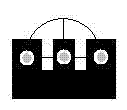
The Sight Picture. Often I ask the students what they are looking at and what their sight picture looks like. I get some strange answers. First off, the Sight Alignment, how you should align the sights. Take a look at this simple Paintbrush rendering of a sight picture.

When we are shooting target sights, we use the sights with the top of the center post even with the rear sights and we center that across the equator of our target, ( a center hold) or we put the target on top of the center post, (a 6 O’clock hold) which is the least ideal sight picture one can have in my opinion. Now, for Defensive or Tactical shooting, we use just the Dots. Line up the dots, and put that dot on the center of the target as shown in the little .gif image. The Sights and the Target together make the Sight Picture. Now how do we look at the Sight Picture? Our eyes are trying to focus on 3 things at once… something that they are not able to do. So where are we looking at? Our eyes should take a sharp focus on just one thing… the Front Sight Post. In an engagement, we are looking at the target, first and always… When a threat is identified, we bring the weapon up into the eye level and we are now looking at a sight picture. From here, shift your eye’s focus to the Front Sight Post and apply pressure to the trigger. Simple as that. Don’t over-think this. You don’t have time. Place the Dot, and Place the Shot. Nothing else is important to look at.

The Trigger: Triggers get a lot of abuse… They get jerked and slapped and crushed just beaten on all the time. You can do everything right, and ruin the shot with even a slight case of trigger abuse. When you pull the trigger, do so with a steady pressure until the trigger breaks and the weapon is fired. To do this right, in a way that is consistent, it requires practice in large quantities. That means Dry-Fire Practice. So get some snap-caps and get to work. If you are using a pistol with a round barrel, balance a coin on it. You should be able to dry-fire the weapon without the coin falling. I like to use a laser to practice this as well. If you have a laser mounted to the weapon in the guide rod or the grip or wherever – great. You can activate the laser and dry-fire with it. The laser will clearly show you what you are doing wrong. If you do not have a laser, you can buy a cheap laser pointer for a couple of bucks. Many of these are the diameter of a pen. You can put the laser pointer in the barrel. It doesn’t have to line up with the sights. You are not aiming with it. But it will still show you what is happening. The laser should not move when you dry-fire the gun. Now, it’s important to practice dry-firing just as you would with live ammo. Important to note – Do not Dry-Fire any Rim-Fire type firearm without the use of a Snap-Cap. Most of the time with the laser, you will see the dot jump to the right. This is sometimes caused by a bad placement of the finger on the trigger. Use the Pad of the trigger finger, not the knuckle. The pull should be straight in line with the trigger’s arc of motion. Some triggers have Over Travel. This means the trigger breaks and fires before the trigger has moved all the way back… this allows the trigger to jump that last distance and smack the back-wall of the pull and this could throw the shot off. Over Travel can sometimes be remedied by the user, or sometimes it needs a Gun Smith to sort it. The trigger can be gritty, or heavy, or it could stack. Stacking is where the trigger pull gets heavier just before it breaks. There is a lot that can be wrong with the trigger pull’s qualities… but almost all of them can be overcome with lots of dry-firing practice. Okay, now that you have the trigger pulled back, and the weapon is fired – keep the finger on the trigger. Almost all Novice shooters instantly at the firing – take their finger off the trigger completely. Then they start all over again. This isn’t good. This leads to Trigger Abuse. Don’t beat your trigger. When you break the shot, keep your finger on the trigger. If you have a rifle, pistol, revolver, shotgun… take a moment there at the back wall. This is a part of Follow Through. Don’t let up off the trigger until the Front Sight is back on the target. Let the trigger forward slowly. You will feel the trigger reach a point before it’s all the way forward where it clicks. That’s the reset. As soon as it resets, start pulling it back again for your second shot and then so on.

Training Scars: There are tons of Training Scars out there, too many to deal with. But I’m going to talk about two of them. A Training Scar is any Bad Habit you have picked up that needs to be worked out. If you have Training Scars, the best thing to do is to get with a serious Firearms Trainer to work with you. Your shooting buddy doesn’t qualify. In fact, that could be one of the reasons you have Training Scars. Find a real Trainer who can watch you and see what you are doing wrong so he can help you do what is right. Anticipation can be fun and can sweeten the moment. Like when your lover comes out wearing some sort of sexy candy wrapper (what you tear off before consuming) that is some excellent anticipation. For those to young to know what I mean, think about Christmas Morning before Mom lets you open those presents. Or if your Extreme-Muslim – that moment just before Akmed pushes that button to detonate that vest you made for him. Those are examples of Anticipation. In shooting, Anticipation is a bad thing. Don’t anticipate Recoil. This leads to an instant before firing where you actually push the gun. Even just slightly… this can throw your shot off. Anticipation’s Best Friend is Flinch. Flinching is bad, because you can do all kinds of jacked up things including actually closing your eyes just before firing. Look, it’s a simple as this… you can’t hit the target if your not even looking at the thing. You are also legally liable for every round that you launch… so it would be in your best interest to keep your bloody eyes open, okay? Now, if you have Flinch it’s going to take a lot of training to get it out of you. The best way to get rid of flinch is to take your shooting back to Square One. Get out the old .22 pistol or even an Air Gun. (Airsoft isn’t accurate enough to really see what you are doing) Start shooting those low recoil guns, use the laser, and dry fire a lot to work out any sign of Flinching.

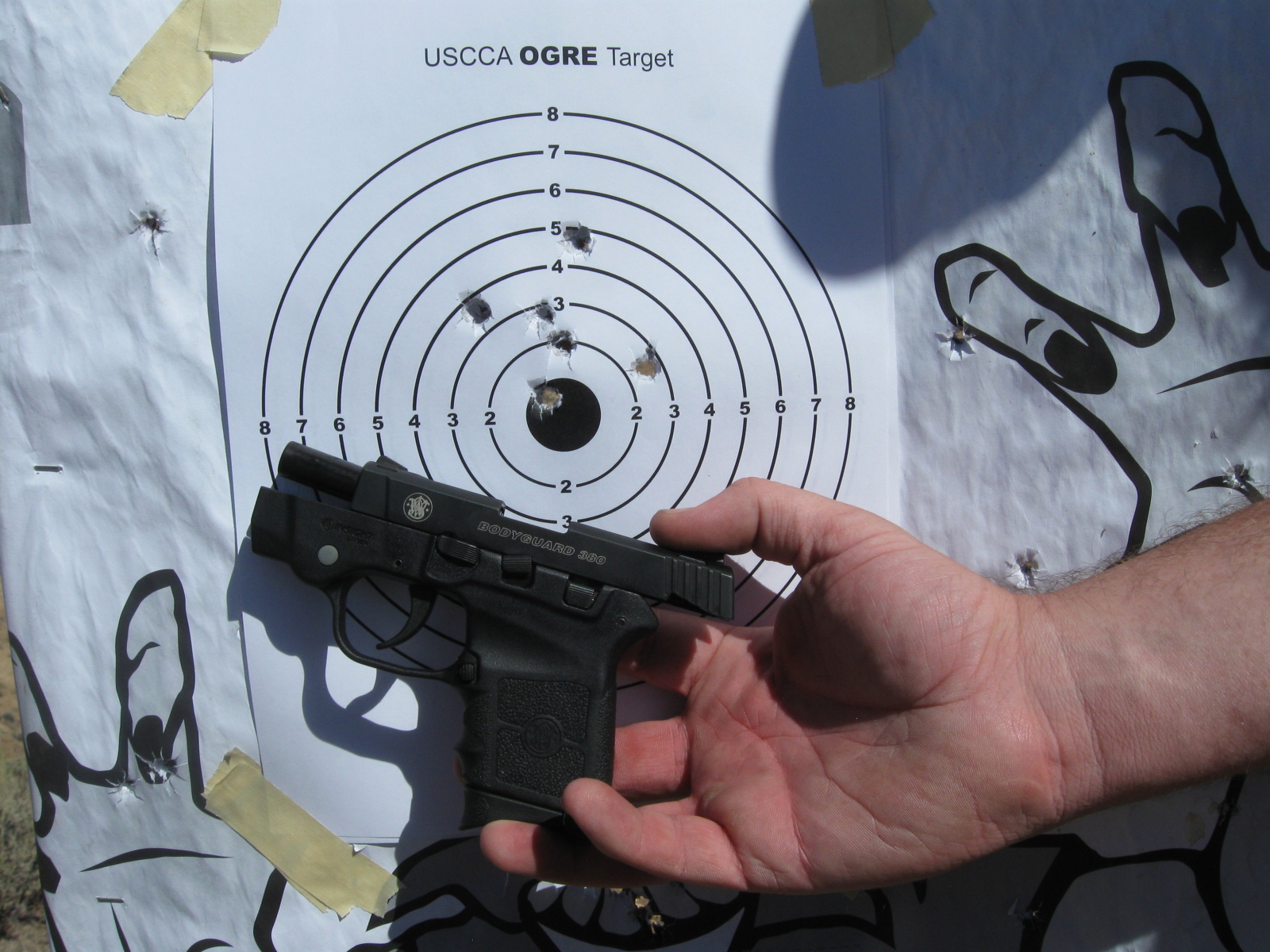
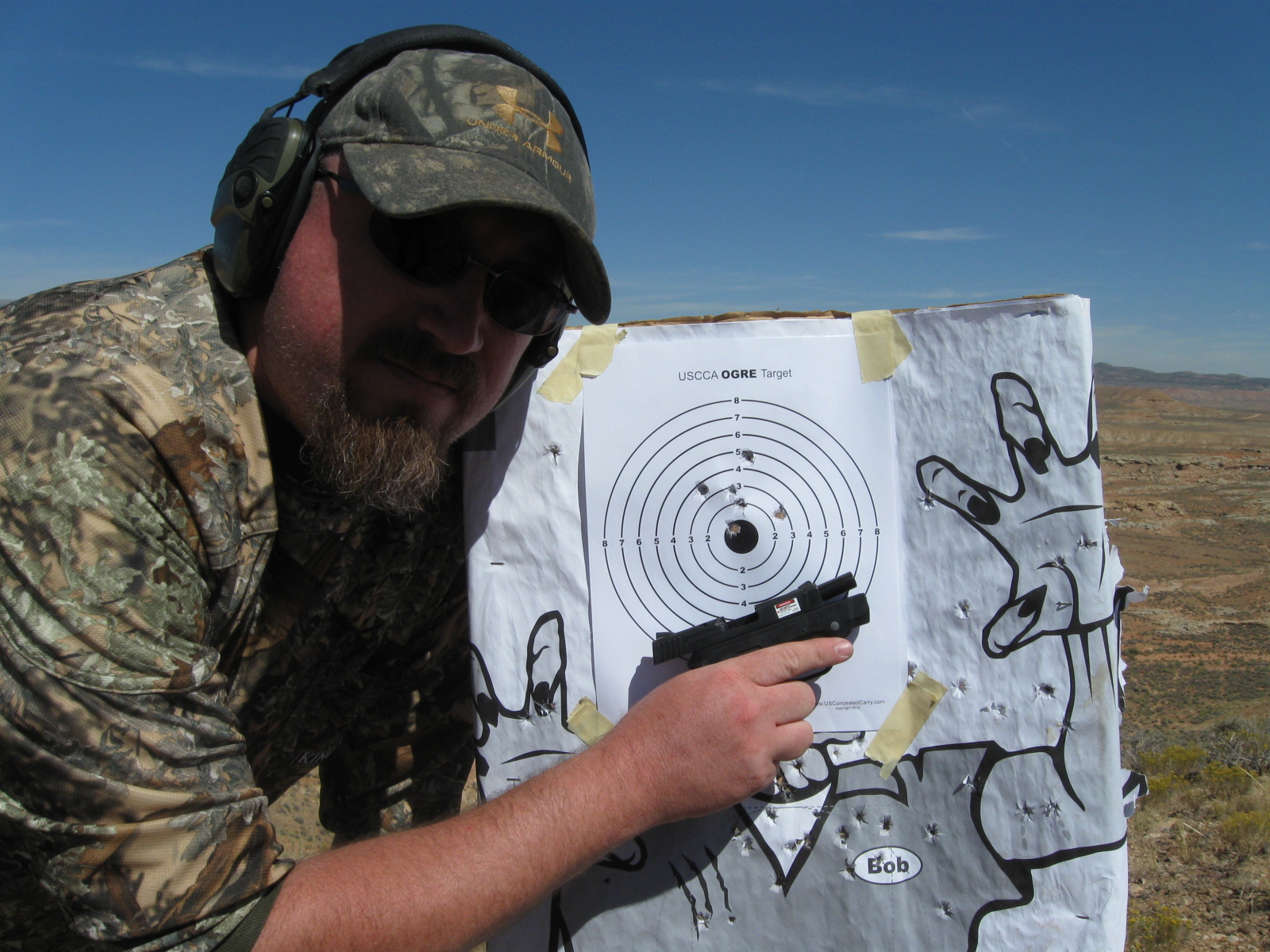
S&W Bodyguard .380

It’s been some time since my last article for Concealed Carry Magazine. I’ve been meaning to write one sooner, but to be perfectly honest, most of the new concealable handguns that have been coming out have just not sparked much of an interest in me. I’ve been bored with most of the options out there and no one wanted another Compact 1911 article. Most of this time off I’ve been packing SIG C3’s and 229’s and all year I’ve been packing a G23-RTF2 and that has all been from Mark Walter’s bad influence on me.

At SHOT 2010 I trudged through the show looking for something that peaked my interest enough to review. As I looked at all the new guns on the market, I really struggled with the malaise that’s been plaguing me when it comes to small handguns. That was until I walked into the S&W booth. They showed me their new Bodyguard BG380. Instantly my Spock Eyebrow went up. What’s this? A little auto pistol that I want to go shoot? Since Kahr hasn’t come out with a 10mm MK10 pistol, this would do.

While the BG380 is the same size as the other pocket .380’s that have dominated CCW handgun sales for the last two years, the new Smith is different. The difference comes from the whole feel of the gun. It’s as if S&W took an M&P pistol over to Walt Disney and put it in their “Honey, I shrunk the thing” machine. Normally when you shrink something, you lose a lot of qualities other than just size and weight… much like the Doberman Pincer shrunk to Toy Pincer size gives you a twitchy, fickle, and delicate thing. These Micro M&P’s are just as serviceable and snarly as the original… just in pocket size.

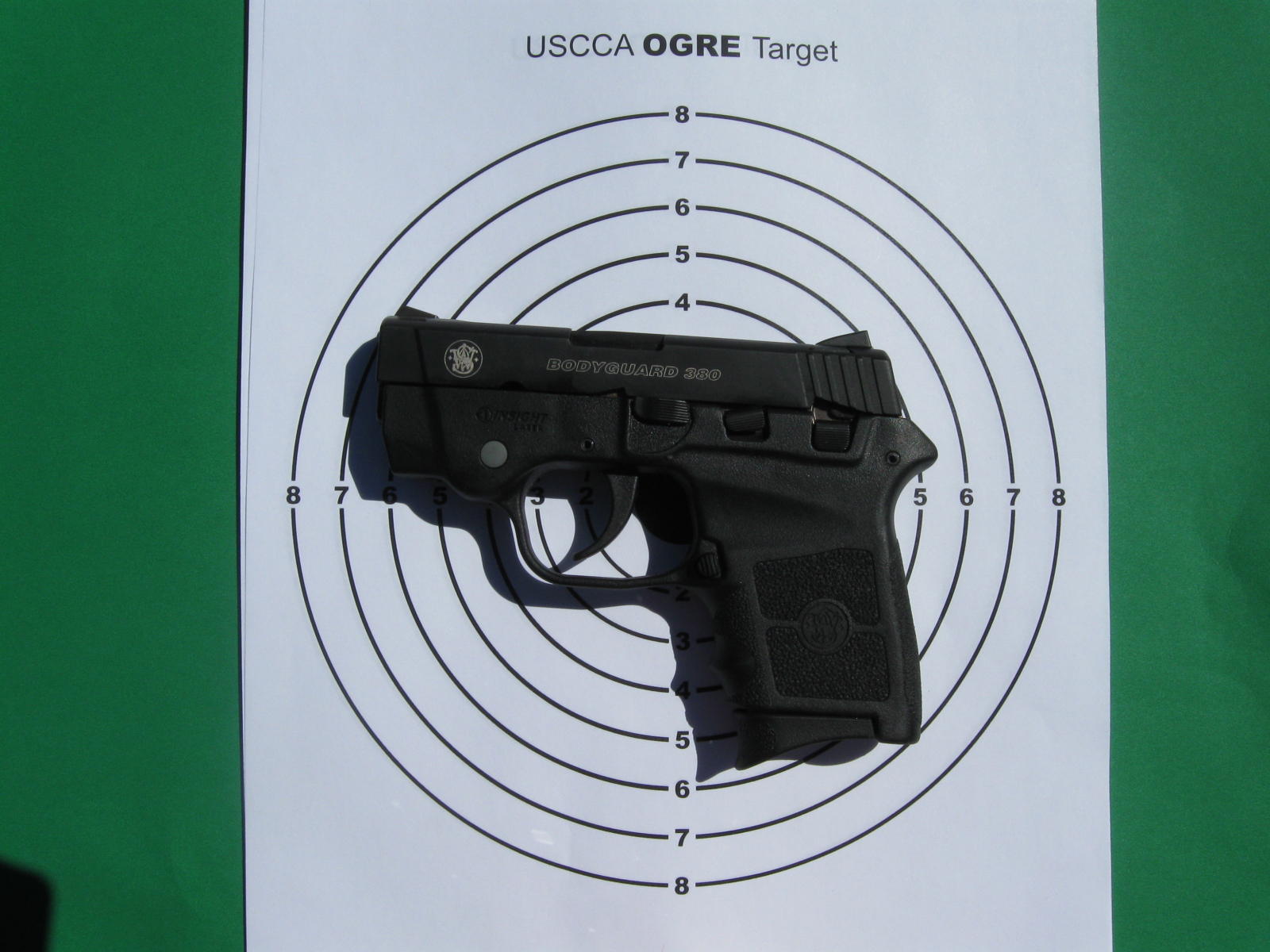
The most unique feature of the BG380 is the in-frame laser module. Insight Technologies makes it for S&W and we’ve not seen anything similar out there. The Module, should it fail, is replaceable. It’s fairly bright, but not as cohesive as other laser aiming devices from other companies. This isn’t a problem as this pistol isn’t meant for any longer range shooting, but I would have liked a more powerful laser. If I was Crimson Trace or Viridian, I’d be working on my own module to drop into the Bodyguard. The limitation on power comes of course from the batteries, and having the batteries within the frame as they did it makes me scratch my head. You can only shove so much battery in there. I’d have rather engineered the weapon to carry the batteries in the floorplate of the magazine and had power contacts on the sides of the magazine body. Dewalt knows how to do this, it wouldn’t be hard and they would have been able to use more battery. More battery is a good thing.

Some shooters argue against lasers as unnecessary gadgets. It’s true that a laser isn’t a necessary thing, but any device that gives you any sort of an advantage in target engagement or intimidation is a huge benefit… especially with pocket sized guns. Another thing some guys claim, is that sights are unnecessary to such small guns. However I checked the law books and I didn’t find any exceptions to gun laws or liability of gun use for small guns. You launch a bullet out of a small gun, you are just as liable for where it goes. And for a pocket gun with the purpose of defensive use, that bullet needs to go exactly where it will do the most work. Shot Placement is even more critical in small defensive guns.

The pistol its self is just the platform from which the projectile is launched… and the BG380 gives you a small, concealable platform that you can have on you at all times, or just when greater discretion is required. The only thing one is giving up with the BG380 is power. I can’t let this review go by without mentioning that I consider the .380 Auto round to be the minimum cartridge which I deem as acceptable for defense. It falls someplace in the Force Continuum between “Harsh Language” and 9mm. I would only use it when guns of greater caliber are not an option. While I am not a huge fan of the .380 auto, I must admit to being a fan of the Bodyguard. It’s cool, it’s reliable, it works. It’s an absolute buy for those looking for a pocket pistol.

All New

What really bugs me about the Gun Industry is how they change one or two small details and act as if it’s something completely new.

Take a look at SIG Sauer.  They have the TACOPS 1911, which is a great gun.  They Cerakote it tan, change the grips, and all the sudden it’s a “Scorpion” and thus a completely different gun.  Some rifle makers will change the stock, and now it’s a completely different model.  For the most part, the gun is only cosmetically different.  Yet the gun companies wave flags of originality and claim innovation.  Look, if you are using off the shelf parts that have been on the market for over a year, you should not be allowed to use the word “Innovation” or anything in a thesaurus that is similar.   Worse yet, the Gun Writers out there who have to review these things.  Never mind that its the same damn gun with different cosmetics… these guys have to write another 2,000 words with photos on how this is something new and fresh.  And they publish those articles and people buy those magazines and it’s all just rehashed shit from 20 years ago.  I’m not naming names but I swear to the All Holy that I read the same rifle article 20 years as I just read in a new magazine 20 minutes ago, with the only difference being the freaking handguards.  Its the same thing.

christian_bale_as_bruce_wayne_and_batman__drawing__by_p_shdw-d665959

I was going to say Clark Kent and Superman, but I hate Superman… he’s a Douche.  But look at Bruce Wayne.  League of Shadows Ninja, and then changes costume to become Batman.  Really only cosmetically different.   Bruce Wayne could still kick your ass without the Dark Knight costume.  He doesn’t need the costume to perform.  And just because he is in the costume, doesn’t mean he’s suddenly a better fighter.  He’s no tougher, no stronger, or any smarter while in the bat-suit.
Who else does this a lot?  Kimber.  Freaking hell, they only make like 3 different 1911’s but given them different skin treatments and all the sudden you have guns from 699 all the way to 1400 without any special Custom Shop work… just cosmetics.
Poor Gun Review Writer.   This is one of the reasons I stopped writing gun reviews.  I got really jaded and sick of rewording the same review for the same gun that’s just had a small detail difference.
Kimber Custom II.  Kimber Target II.  Same flippin gun, just a different rear sight.  But according to Kimber, it’s a whole new model.
Now, I’m not busting Kimber’s nuts on this, or SIG’s… because so many other gun makers do it too… they all do it.  Accept for Taurus, who has so much CQ issues, everything they make is totally different.

Imagine if you will, if the Auto Industry worked in the same fashion?  This car is the same as that one, but this one has XM built in, so it’s a totally different car!  We call this one the Stallion, and this one the Tornado Hunter!  See, it has a pin stripe too.  (Well, they kind of do… looking at the Subaru and Toyota sports car, but that’s another subject)

No, people would not tolerate this in the auto industry.  Yet it’s SOP in the Gun Industry.  I like what the Car guys do those… They have Trim Levels.  Same car, with a series of steps in upgraded add on features that go from basic to fully loaded.
The Gun Industry should look at that model for awhile and think about it really hard.  Because right now it’s just ridiculous.

Now, I understand that a gun company needs to make new stuff to sell more stuff.  But I think these guys are going about it all wrong.  Let’s look at to examples.
Glock.  They make the same damn gun in 3 sizes in common calibers and that’s it.  That’s what they do… because they’re Glock.  The do what they do and they do it very well.  You don’t hear about quality control issues with Glock. You don’t hear about anything other than “It’s a Glock”. And they sell and sell and sell to the point that Glock’s Marketing effort is about like the Maytag Repairman’s schedule.  Because you know what you are getting with a Glock… Your getting a Glock.  Now look at SIG.  The P250 the P2022, the 229, 228 M11 226 MK25 and they are all different and you really don’t know what you are getting anymore with SIG or anything from SIG wearing that badge… I’m saying this because I love SIG and really I’m feeling like they have let me down.  Lost their way.  Looking more at Cosmetic Themes than keeping a tight ship… because I’ve seen some SIG’s with some serious issues that should not have been there.
Some guys have said they wished Glock was more colorful or fabulous like SIG is.  When really I’d like to see SIG act more like Glock.  The worst thing Glock stamps their name on is those disposable pens they give away.  SIG’s?  That could take all day talking about.  You don’t know what you are getting with SIG anymore and that’s a shame.


My disagreement with Grant Cunningham and Rob Pincus…

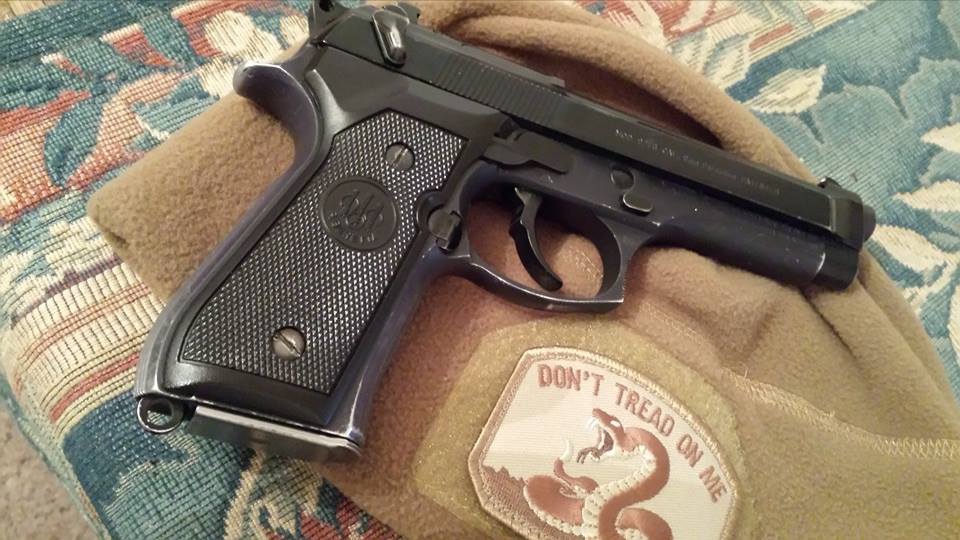
My disagreement with Grant Cunningham and Rob Pincus regarding the Beretta 92FS.

I checked out a podcast that Rob Pincus was guesting on not too long ago.  The question was asked “What gun do you hate when they show up at your courses” or something along those lines… I forget, it’s been awhile since I heard the podcast.  Rob’s answer was “The Beretta 92”.   Now, I respect Rob a great deal, and while we differ in opinion on something, I always respect his opinions and positions because he always has a well reasoned explanation for them.   

Rob tends to not like the Beretta because it’s large and heavy for it’s caliber… it is.  It has an old fasioned DA/SA Trigger mechanism… it does.  And it has an upside down, slide mounted safety lever.  Yup.  It has that too.  This is a trifecta of good reasons not to like the Beretta.  Rob is a believer in consistency, and a good consistent and simple trigger mechanism as in a modern striker fired pistol gives the shooter some advantage… Yes, that’s true too.
But I still disagree with him regarding the Beretta 92.   More on my rationalizations later.
This morning I read an article by Grant Cunningham on why the Beretta 92 is an inefficient handgun for defense.  And now I’m like “Oh come on.”  I like Grant, and respect his opinions as well.  However, I disagree with him on the Beretta 92.

“When you need to use your handgun, it should ideally come out of the holster in a ready-to-fire condition without you needing to do anything extra before pulling the trigger.”

I agree, Grant.  And here is what I do…  When I holster the Beretta, I then flick the weapon Off Safe.  The Beretta is certainly safe to be carried in such a manner.  Because in order to fire, the trigger must be pulled all the way to the rear to move the rather large and over-sized firing-pin block up and out of the way of the firing pin.  Also, the trigger being pulled to the rear moves the hammer back against spring tension, into the firing position before it can be released to fly forward to hit the firing pin.  These things are not going to happen on their own if the weapon is riding in any holster of half decent quality.   Anything that could impact your holstered weapon hard enough to cause a discharge… Well, you’ve either been hit by an RPG or rapidly moving Osh-Kosh built M-ATV armored truck.  Either way, you’ve got bigger problems to worry about than the risk of a 9mm wound in the leg.

As far as DA/SA trigger pulls go.  This is a training issue.  I’ve seen many shooters running DA/SA guns, do so with great skill and with great results.  SIG’s, HK’s, CZ’s, S&W’s, and most self loading guns that are not 1911’s or Striker Fired Polyguns are in fact DA/SA guns.  A shooter can and will get used to the trigger mechanism if they will actually get out to the range and fire their weapons once in awhile and practice with them.

Here’s the thing that the DA/SA guns have over most of these Striker Guns… That SA pull.  I’ve fired some DA/SA guns with triggers so good it makes you want to go slap Gaston.  Even with my tricked out Glock trigger, which is really dang good… It’s not as good as the SA pull on my Beretta 92.  It just isn’t.  Because mechanically all that trigger has to do is release the hammer.  In the Glock and M&P, the trigger still has to pull that striker back just a little more before it can release.  This gives it just a bit more take up… a little longer… just not quite there where a good SIG or Beretta or CZ trigger can be.  I won’t say HK, because they have triggers like toggle switches, but that’s because the Germans believe in Corporal Mortification or something… I don’t know.
But back to the Off Safe Carry, the process is simple.  After firing, you decock and safe the weapon, holster safely, and then flick the weapon off safe.  Done.  The most dangerous moment in handling the weapon is when holstering.  And holstering a decocked Beretta 92FS is probably the safest gun you could ease into any holster.  It doesn’t get safer.  The trigger is disconnected and the firing pin transfer is rotated 90 degrees away from the firing pin.  There is no way a round could go off in this condition.  No matter how sloppy your reholstering is.  Once safely nestled in it’s holster and everything is good… *Flick*  Your weapon is now read for a rapid draw and fire without worrying about an external safety.

This method is not new or unique by any means.  I know many Military Personnel who carry in this manner and are trained to carry in this manner.  It’s safe and efficient and requires very little training to get used to doing.  1 day at the range.  That’s it.  Drill the motions for awhile, and then reinforce throughout a day of shooting… pretty much done.  This is not solving a Rubik’s Cube.  Give the Students more credit.    Many who detract the Beretta’s mechanics make allowances for the 1911’s.  Yet the Beretta has a couple distinct advantages.  One, the Beretta’s safety when carried Off Safe is only manipulated after the fact.  When everything is cooling back down and the gunshots are still ringing in your ears and your getting your breathing back into control… your checking yourself and following your training and thinking again.  The 1911’s safety is manipulated in the heat of the “Oh Shit” moment when you “Skin Leather” and all your thinking about is that Treat Target that’s closing that 21 Foot Rule distance like a Saber Toothed Cheetah.  It’s in that moment with a 1911 that you have to remember to sweep the lever Off Safe.  Easier putting it on when reholstering than taking it off when drawing.  See my point?  Two, the other big advantage with Beretta is that I can load and unload the weapon, press check, and do whatever in need to with the Safety On.  With the 1911, any slide movement has to be done with the safety off.  And since you are gripping the weapon when doing it, you most likely also have the secondary grip safety disengaged as well.  How many 1911 Operators out there have a 5 Gallon Bucket of Sand they use for Clearing and Loading in their home?  Not many? Who’s safer?  Advantage Beretta.  I’m not saying a 1911 is unsafe here.  But if we are boiling down Shooters as  thick headed cavemen, I think I’d much rather see the students with a Beretta than a 1911.  Personally I do cringe when students bring 1911’s shorter than 4 inches… but that’s because those guns are going to be jamming like a jazz band before the end of the day.  And I’m saying this as a guy that loves 1911’s.  But it’s an Aficionado’s gun.  An Expert’s gun.

The gun is large and doesn’t fit everyone.   True.  But if I am buying the gun for myself and it fits me, then why the hell do I care if it might not fit someone else?  This is my gun.  Don’t “What If” unlikely scenarios that support your throwing your weapon to a small handed partner to support your argument.  Leave such moves for the next Die Hard movie.   Sure the 92 is a large pistol.  My hands are not all that large, and it fits me.  I can shoot the Beretta quite well.  And I enjoy doing so… Because evidently shooting the same gun that has served both Military and Law Enforcement roles around the world for the last 30 years is something again to grinding your own flour and baking your own bread these days.  Quaint and rustic.  Like rolling down a car’s window with a crank.
Here’s the deal… The 92FS/M9 pistol is a fantastic handgun.  It’s battle proven around the globe. It’s both accurate and reliable, and has proven to be more accurate and reliable than most. It’s passed all the tests and it’s leaped all the tall buildings and it’s still serving strong.  It’s one of the very best handguns in the world.

Armchair Quarterbacking: Kel-Tec

It’s time for another Armchair Quarterbacking session of another Gun Maker. This time, I aim my sights on Kel-Tec.

Kel-Tec CNC, Inc. is a small gun maker out of Florida that specializes in building some very affordable little guns, and some guns that are just crazy enough to be absolutely brilliant.  One thing I admire about Kel-Tec is that they are clever and not afraid of trying something completely different.  And because of this some things are quite all there.  Not every piece of pasta sticks to the wall.  But over all, it’s really a home run.  However, it’s time to take them down a peg, and then bring them up a few notches, if you know what I mean.

Let’s start with the Branding. From the perspective of a former 9 year Gun Dealer and dealing with the general gun buying American consumer, there is room for some work.  I’m glad they took the US Flag out of the logo.  I’m not saying that I’m tired of the Flag, but Old Glory shouldn’t be used in anyone’s marketing.  The new logo however still has the red stripes, hinting at the flag that’s some place in negative space behind Kel-Tec.  It even has some angle built in there to make it almost look like “action lines”.  Moving forward… speed… That’s good.  But the name in the logo is Kel-Tec.  One of the most misspoken, misspelled names out there next to Burnelli.  Let’s clean the name up, clean the logo up… and make it just “KT”.  Maybe even with an angle. KT.  Let’s try that in bold… KT.  Solid. Simple.  And hard to screw up.  Throw in those red action lines behind that.  HK, XD, FN… Those work, and KT works too.  We want a new face for this brand once we are through… so KT is good to go.  Moving on.

Let’s go down the list of guns.  First one, the SUB-2000.  Generally the public has a love it or hate it response to the Sub-2000.  What does the “Sub” mean?  Don’t answer that, no one cares… But people do ask that at the gun counter.  If I had a dollar for every time I was asked that question, I’d take my wife out to a lobster dinner. In France. And I wasn’t even a stocking dealer.  Here’s the thing… This is a clever little carbine with a lot of spunk.  If it were a dog, it would be a Jack Russel.  I mean that as a compliment.  Let’s first fix the name.  Call it the S2K.  The KT S2K.  Just typing that, the hard core Gun Guys are going to readily and automatically know what that is.  Because that’s what a lot of us call it anyways.    You know what?  Let’s take this gun up a notch, and end up calling the new version the KT S3K.  Let’s start by getting rid of the folding trick.  It’s really costs more sales than it’s garnered because most guys just didn’t like it and ended up picking something else.  Anything else.  Even the Hi-Point Carbine.   Sure, the Sub-2000 has it’s fans, but it’s got more detractors. Which is why you don’t see them in everyone’s gun vaults. Let’s make it a fixed receiver, with the barrel threaded securely into a beefy steel block for best accuracy, like your SU-16. A trunnion (that means on a pivot) mounted barrel just gives a lot of people the creeps.  Give it a monolithic top rail.  This gets rid of the rear sight wedge thing.  You show a tubed fore-end on the site, so I know you can do it… but I’ve never seen one in real life.  The new hotness is a tube that goes all the way out to the muzzle.  Do that.  Let people decide what flip up or fixed sights they want on this.  That’s what the people with the money to burn are buying.  You don’t really need a muzzle break, but do it anyway.  Because that’s what people with money are buying.  Not an A2 style, do something that looks high tech.  And then recess that and make the fore-end deflect the blast back forward.  They are doing this with AR’s, you can figure that out here.  Now instead of rails, leave it round, but use pre-threaded holes and rail sections so the customer can do whatever he or she wants with it.  Redesign the pistol grip to be more like an PF-9’s grip in appearance and feel.  That’s a good grip.  It works, so pass it along.  The Sub-2000 – S3K carbine can really use that.  Contour the receiver’s looks to bring it up to date as well.  The old one looks terrible.  The stock needs to look more up to date as well.  More like the new Battlelink Minimalist stock, and let it have a little adjustment for length of pull.  To simplify things, I’d drop the number of magazine options to one.  Glock.  If you have to have two, then Glock and Beretta.  Because those mags are cheap and abundant.   You can do all of this and keep the price low… MSRP can be 699 and guys would line up to buy it.

The SU-16.  This is the Football Bat Rifle.  You have the SU-16A, B, C, CA, and D, and they are all F, U, B, A, R.  The Integral bi-pod is a pain in the membrane.  Get rid of it.  Any accuracy this thing can have is ruined with it, and if you grip it inconsistently.  Give this the same free floating barrel treatment that we just discussed with the S3K.   No more different versions, and get rid of the Grandpa’s Shotgun stock.  Give it an AR Grip attachment point and sell it with a basic A2 grip on it.  For the stock, give it something that looks like its off an ACR or SCAR or a G-36.  Don’t do an AR stock here… you can Side Fold… Underfolding is a poor choice if you can Side Fold with some rigidity.  Even Underfolding AK’s are less popular.  Do this and the SU-16 will become quite popular very quickly.  Also, the name… The Sucks 16?  That’s what a lot of guys are calling it.  Let’s get rid of that badge.  Give it a good trigger pull, some nice looks on the receiver and call it KTR556.  That sounds like it’s going to go out and kill shit.  That’s not something that sounds like it sucks.  Sounds more like it’s some Predator Murder Weapon.   Now get rid of all the other versions, and only offer the one… The KTR556.

The RFB.  Take every RFB you finish, and send it to Crusader Weaponry in SLC.  There, Crusader can do the permanent Slipstream Treatment to the internals of every single RFB before it ships to customers.  Better yet, buy Crusader Weaponry, move them to Florida lock stock and barrel and have them turn the RFB up to 11.  That’s it.  Done.  Don’t touch anything else, unless Crusader wants to Cerakote them.  Which is a great idea and should be done.  So do that.

Okay, and now for the thing that is missing from your line up.  The 5.56mm version of the RFB.  Where is it?  I’ve not seen that yet, and this is wrong.  You need to fix this.

The KSG.  I completely fell in love with the KSG at SHOT Show when I saw it and handled it.  And then some time later, I finally had the chance to shoot one.  Oh I was looking forward to that so much… and then I stepped up to the firing line.  Imagine lusting after Scarlett Johansson, and then you finally get to slow dance with her…  and you find that she has the body odor and breath of a 3 week dead trout.  I’m not a mechanical engineer, but that gun needs more work than an 84 Audi Fox running on only 2 cylinders.  The main problem from what I’ve seen in the guns I’ve dealt with… Things are binding up inside.  My suggestion for the RFB should also be applied to the KSG.

The PF-9.  Don’t touch it, it’s great.

The P-11.  Make it look like a double stack PF-9.

The P-32.  .32 Auto is useless.  The only thing worse is the .25 Auto and the only thing worse than that, are the people who like .25 Auto.  Change it to a .22 LR and call it the P-22.  And make it look like a little PF-9.

The P3AT.  Make it look like a little PF-9.

Okay, now that you’ve done that, rebuild them all into Striker Fired pistols because all of these triggers flat out suck.  No, really.  They do.  They just do.  Look, I love these little guns, seriously.  But the triggers have been what has been holding these things back from being as awesome as they could be.  The Double Action Only thing was fine for Kel-Tec, but for KT, it’s got to be next level.   Knowing how you guys think outside of the box, I would be surprised if you didn’t already have a striker mechanism designed.

Now, there is a hole in this line up.  Where is the full sized, duty worthy, double stacked auto?  A PD-9 and a PD-40.  You guys are more than capable of bringing out something new that can run with the big dogs.  Something wild and different.  I’d be surprised if it didn’t look like something off of that Oblivion sci-fi movie.  I bet you guys have something up your sleeves.  Throw it down.  If not, do it.  Soon.  Very soon.

The PLR-16.  Give it an A2 Grip, so people can swap that out for their favorites. The rest is good.  Activate the Crusader Plan on these too, just for good measure.  The .22LR version, consider the same things.

Okay, now the for big one.  The PMR-30.  First off, why in Hades Underworld do you not have a .22LR version of this?  Whatever you are doing, drop it, and make a .22LR version.  While we’re at that, forget the 4.2” Barrel, and roll it out to a full 5”.  For both versions.  But especially for the Magnum.  Anything people are doing with the PMR-30, they can do better with that extra inch of barrel and sight radius. .22 Mag will also gain a good advantage from the longer runway.   Same with the .22LR.  So just do that.  The rear of the slide is just so incredibly hideous that it causes the same madness as prolonged exposure to Cthulhu, or Congress Woman Fredrica Wilson.  It just hurts to look at and you can’t really tell how to fix it other than to just scrap the whole thing and make one that looks like… oh… I don’t know… A GUN.  Browning has this figured out on the Buckmark pretty well.  Regular ridges and it has two nice “ears” that really help in charging.  The barrel on the PMR-30 is a hot mess… Beef it up to keep some weight on the muzzle end, help accuracy, and help with the thermal dynamics. Or, contract with Tactical Solutions out of Idaho to do your barrels.  They make some seriously accurate, tac-driving barrel.  But still, the PMR-30 needs some beef there.  Not a lot, but more than it has.  By about 100%.   

There is something about the polymers that you guys use that just look… like they are made from recycled AK Mags.  I know the stuff is tough.  I watched a P-11 take both axles of a Chevy 2500.  It was my P-11 actually and it was on the back bumper when a helpful soul decided he was going to move my truck for me… He lurched forward, causing the gun to fall, and then backed over it.  The gun was just fine.  This was out in Utah Deserts at a super secret shooting location.  Dirt, rocks, BFG A/T, didn’t even leave a mark.  But it still looks lower level.  Now the options are to change the polymers… which isn’t really necessary.  Or coat the polymers.  Which is a damn fine solution.  Cerakote everything.  Added Value.  And add some profit.  Cerakote the frames early on in a mass production method and there you go, cost effective and simple, and the guns are going to look so much better that everyone is going to want to shove one down their pants.

This brings us to the last problem.  Actually two problems.  First is your Production Capability.  You don’t have any.  The PMR-30, RFB, KSG… People have been waiting to get them.  You are not making them fast enough.  Now, while you could expand your factory and hire more people and invest in production capability… It might be better to subcontract production to a company that has capacity.  Even if just for bottle-neck causing parts. Or even whole frame assemblies or slides.  Whatever you do, you have got to get your Production numbers up.  And your Quality Control.  Ramp those up.  And Secondly – Your Distributor Only sales model.  Oh, it’s easy to go D.O.  But D.O. is a No Go for many Dealers who stock guns.  Remember when I said that I wasn’t stocking them?  I wasn’t because there was no margin in them.  I’d order them for customers on request, but I made nothing on those sales.  So I had no incentive to sell them.  I had more incentive to nudge the customer to something I had on the shelf.   Distributor Only works for Ruger because there is enough nationwide demand to drive those sales.  Kel-Tec doesn’t have that.  Let’s look at FN.  I was a full line stocking FN dealer.  We had everything from pistols to bolt action rifles, FS2000’s and PS-90’s… We had all of them and loved selling them.  And then FNH decided to drop the Direct to Dealer business model and go Distributor Only.  Essentially giving their Dealers the Middle Finger.  We stopped ordering FN.  And were soon out of FN.  The only FN gun we had requests for was for the Five-seveN pistol, so we kept getting those in… when we could.  But everything else… those nice Patrol Bolt Rifles… Sorry.  We sold Remington Tacticals instead.  At that point we were #4 in the State of Utah.  A dealer of that magnitude dropping your line?  Ouch.  And we were not the only ones.  FN took a shot to the nuts because of that.   You open up to Direct to Dealer Sales and push those dealer incentives… Your sales will increase.  Your profits on those sales will increase.  Because there are no smarmy middlemen to take all the margins.

Keep up the good work, KT.  Keep pushing those new ideas.  Keep being awesome.  We love you guys and wish you balls to the walls success.