LRI Long Range Shooting Course:

LRI Long Range Shooting Course:

(For the photos that went along with this review, check out the page I first published them on here)
500 Miles to nowhere. I left Ogre Ranch after 9AM… a late start… Friends and Family delayed, but quite honestly I was reluctant to leave my boys. I wanted to bring them with me.

The drive was long but not bad at all… crossing the 500 miles I went through some of the most gorgeous country I’ve ever seen. Oceans of grassland, dotted with Pronghorn. So many antelope that I couldn’t believe it. There was a Speed Goat everywhere I looked. Most of the trip I’d see them individually, but as I moved further north east, I began seeing them in larger groups. Even a good sized group that could have numbered about a hundred. I’ve not seen that many in one group in almost fifteen years.

LRI is located near Lance Creek Wyoming. Now, you guys know I bust on Vernal, Utah for being a small town. Vernal is cosmopolitan compared to Lance Creek. I’ll try to remember that next time I complain about the lack of good eateries in Vernal. In about a week once this is through.

LRI HQ is a simple steel building that was built in a week. Hastily done, but accommodating. Plenty of room for everyone, plenty of space. The bathroom has a door, there is a shower, urinal, toilet, sink, and there is a Washer and Drier. Everything one needs. Military bunks that could have been taken straight from Ft. Benning’s Harmony Church, where I did my Boot Camp way back when. Brought back nightmares of Drill Sergeants in Campaign Hats. Luckily those nightmares did not materialize as Shep and his crew of Instructors are casual and laid back.
September gave us a cold snap so this first night, it was cold. As it would be every night of the course. All of us gathered the night before class started so we could start first thing Monday morning. We bullshitted that night, and we could see our breath while speaking. The space heaters can not keep up. This is why LRI has no scheduled winter courses. While it was chilly, it wasn’t too cold. We were told to bring layering clothes for cold weather so no one was uncomfortable. If you got too cold, Shep’s dog, Ruben, could come over and give you a friendly hump to warm you up.

After driving all day, everyone was just happy to be able to walk around and bullshit. Most guys at there are former military, so everyone had stories to tell. Looks like a good group so we’ll have a good class once in starts first thing in the morning.


Day One:

We woke up and had chow at 7:30. A great breakfast. We had some class time on the fundamentals and got damn near overwhelmed with information and mathematical formula. Because our class was small, we got through the bookwork quickly. Theory is just that until you put it into practice. Since the weather was on our side here, we decided it was time to head out to the range.

We went to the 100 yard range for zeroing. We worked some drills that I wont get into because they are LRI intellectual property. One fun training drill that I will talk about is the Colored Dot game. There are 4 colors, and rows of four in different patterns, and this was on four different target boards. You get your name called, you get a color called, and you shoot that colored dot on that row, on each target board as quickly as you can. It was a lot of fun and a good challenge.

We had a lot of discussion regarding the critical importance of tracking your cold bore shots. Lots of misinformation out there floating around the Gun Shop Commando Circuit about what a Cold Bore Shot is. What I didn’t know was just how far off those CBS’s can be… and the importance of tracking them. Reason being, so when you make a CBS, you know where it is going to hit. This is why you have to be consistent with your cleaning routine, because it has an effect on your CBS. Drastic effects. These effects were different for each rifle at the course. I never really thought about the CBS like this before. Another reason to keep a Data Book – for each of your rifles.
Day Two:

The food here is fantastic… Chow time isn’t your normally chow hall mess. Larry is a Master Chef… a Grilling Ninja. You will not be disappointed when you drag yourself back in from the range and smell the food he’s been cooking up. Hot coffee and water for Tea or Hot Chocolate was always ready and waiting.

Our days start out at the 100 yard range where we work the FBI Drill and track our CBS. Once that was done we move out to the long range course. We checked our zero at 200 yards and found where we were hitting at distance. This day was about finding our Scope Dope from 200 yards out to 600 yards and hitting at those ranges became clockwork. We discussed Max Point Blank, Wind Drift, and we worked drills between 4, 5, and 600 yards. We also worked on Sniper – Spotter Teamwork.

Day Three:

I’m eating so much good food, I feel sick. My bad knee is kicking my ass. I came to the course with a torn meniscus and ACL tendon, so moving is done with gritted teeth and Tylenol. The LRI Staff were accomodating and while I moved slower, they made sure I didn’t miss anything without holding up the rest of the class. If you have some sort of health or mobility issue, LRI can still work with you so you come away knowing how to get the most from your rifle. In spite of my pain, I’m enjoying everything. CBS, FBI Drill, and we worked from 700 to 1000 yards. Once we found our scope dope for each range… yes, at this point we were already hitting at a Grand. Brilliant! Shooting at a grand, I got scope bit hard enough to cause bleeding. Jason, one of LRI’s former Marine Snipers, asked me if I needed a bandaide. “Fuck a bandaide,” I said, as I jacked another round in the chamber and hit the 1000 yard plate. This just taught me a lesson to be mindful of crawling up the stock.

Now that we can shoot, we have to push it further. To start out on the next phase, first we had to learn how to draw a Range Card. This is basically a map of your field of fire. On this you jot down your ranges to anything out there… target reference points, any identifiable features… known ranges. Also include your scope-dope for those TRP’s. Makes things easier. I’ll leave the details of drawing a good range card to the Masters at LRI. There is a lot more to it, and there are different kinds of range cards you can draw. While this is a standard practice for military operations, it has applications outside of the military. If you are a hunter, you can draw up range cards of your fields of fire from your favorite tree stand or hunting blind. If you are a police sniper, take the time to draw range cards from likely positions from landmarks such as roof tops or towers… having that information at your fingertips could come in very handy in the future.

While we were doing drawing our range cards, the LRI instructors removed the field markers on the rifle range, and scattered the targets around… they were no longer at known distances. 10 steel plates, numbered, and we had to estimate the ranges and jot down our estimated scope-dope for each. Then we did an evil little drill where we have to shoot each plate based on our estimates. Marine Snipers do this all the time… this is their bread and butter as Marty, one of the instructors, explained. The way you do this is with your mil dot reticle in your scope, working a math formula, and there you go. My problem is that I didn’t have a Mil Dot reticle. I had the Rapid Reticle from PFI. There is a way to mil out ranges with the PFI scope – but we didn’t cover this. This was the first time that my brilliant PFI RR800-1 scope became a handicap. You have to shoot a score of 80. I lead the class with an 84 on the first drill.

Day Four:

I was hoping someone would give me a Negligent Discharge and accidentally shoot me in my knee. It kept me up all night… again… We had an MRE for lunch the day before, which means I couldn’t take my normal morning constitutional. Evidently I wasn’t the only one. Farting was abundant. Thank goodness the wind had picked up to clear the air.

We of course did the CBS tracking with the FBI drill, worked some more unknown distance drills, and then we went out hunting.


I’ll just give you the highlight reel now…

The Vehicle Assault Course. The LRI Assault Jeep is a monster. Huge tires, big cage for stand up shooting while on the move… which is perfectly legal at LRI. Not in Utah. Damn it. For this course I used my SIG 556. I rocked the course, not just hitting each target, but double or triple tapping each one – just because I was having too much fun.

Town Raiding. Six of us jumped into the LRI Assault Jeep and we went raiding prairie dog towns. Jason spotted a coyote and called out for me to shoot it. My rifle wasn’t at a friendly angle and thanks to the roll bars in the Jeep, I couldn’t move my gun into a better position fast enough, so Jason shot it. I didn’t mind at all. It was a good shot and the coyote didn’t even twitch. Matt and Shep then had to step coyote excrement as Jason posed for a photo, holding up the dead coyote. Shep clipped the ears for the bounty which is 25 bucks.


On an interesting note, calling in coyotes with commercial made calls didn’t work here, but pounding around in the Assault Jeep, blasting Hard Rock, scaring wildlife in six counties evidently does. On the other hand, using these calls, Mule Deer respond with gusto. We tried to hunt coyotes… and I used a small arsenal of my best calls. Didn’t call one bloody coyote in with them… but two doe Mulies came in at a dead run. Frantic, they were. They got within 20 yards of me, standing up in the open, and they just looked at me with their ears up… it was like they were saying “What!? What is it?!” They snooped around, walked past Matt and then wandered away. I’ve never seen that before.

Another thing I never saw before was a hawk who swooped in for a strike on a prairie dog that I was about to pull the trigger on. He swooped in and perched right there stretching his talons… magnificent bird.

Lefty-Twofer. Jason had a brutal shot which nailed a P-dog sitting in a perfect side on shot position. His bullet clipped the dog in the back of the neck and severed the spine letting the head fall forward unattached. Because I spent a lot of time rolling in Jason’ Chevy in the Shotgun position – I had to shoot left handed. This proved to be a challenge, but no handicap. I made some fantastic shots. The best one was two head shots with one bullet, left handed. These little P-Dogs would be instantly turned inside out in a very violent, graphic manner. It was a horror show.


Now, this was all done shooting 55 grain V-Max bullets with my Savage .22-250 which Rob Bonacci, LRI’s Armorer sorted out for me… The bloody gun could extract a fired shell, but not eject it. He fixed that. Then gave it a tiger stripe camo paint job. And he put a target crown on my carry pistol. Rob is a fantastic gunsmith who really knows his craft. If your gun has a problem, Rob will fix it.


The other students there were solid good guys. Good shooters. Travis and Chris from Magpul Dynamics, with their purpose built sniper rifles. Dimitri from LA. Matt from Min. Matt was the most improved shooter, coming in with his new hunting set up. A Weatherby Vanguard in .300 WSM topped with a Nikon Monarch BDC rifle scope. He couldn’t get that gun to group at all at first… yet went away owning anything out to a 1000 yards with authority. Dimitri, man… he shot group at 1000 yards that was about 5 inches with a .308 using factory rolled ammunition… Federal Gold Match. I about fell over when I saw that. The instructors are good people… Shep, Marty, Jason, and Rob did a great job and put on a course that I will never forget. Larry with the cooking… Stan Wolfe… what can I say about Stan? The man is an institution… he is developing a new mounting system for optics on long range guns that allowed me to hit at 1100 yards – easily – in high wind. He’s Old School Marine, being a Veteran of the Korean War. Stan has come out to each and every LRI course, and while not a student of the course or an instructor per say, he had a lot of wisdom he passed on to anyone who wanted to listen.


Then there is Ruben. An insane Wire-Haired Griffon… which is a hairy sort of sporting bird-dog. The floor was his territory, so don’t leave anything on it… or on your bunk in easy reach… or your sleeping bag with arousing looking lumps. Because Ruben would either steal it or hump it. Including old men such as Larry and Stan. Oh, this was funny.

Ruben was easily distracted with a laser, I found. He would chase it with determination. The trick is to get him chasing a laser, then lead it under or behind the couch and turn it off to make it look like the dot was hiding. Ruben would be occupied with this for a good long time. So if you get Ruben interested in something that belongs to you… get him to hunt that laser dot and he’ll leave you alone.

I had a great time at LRI and I was reluctant to leave this shooter’s heaven… As the road from LRI turned back from dirt to pavement, the music on the radio changed to the news, and instantly I was back in the real world.

I look forward to going back as soon as I can.
Gear Observations: Dimitri was a genius when he busted out elbow and knee pads… and then a saint when he let me use them to help my busted knee. I think brining knee and elbow pads is a great idea… and I would recommend bringing them. Since you spend a great deal of time in the prone, bring a pad of some sort to lay on.

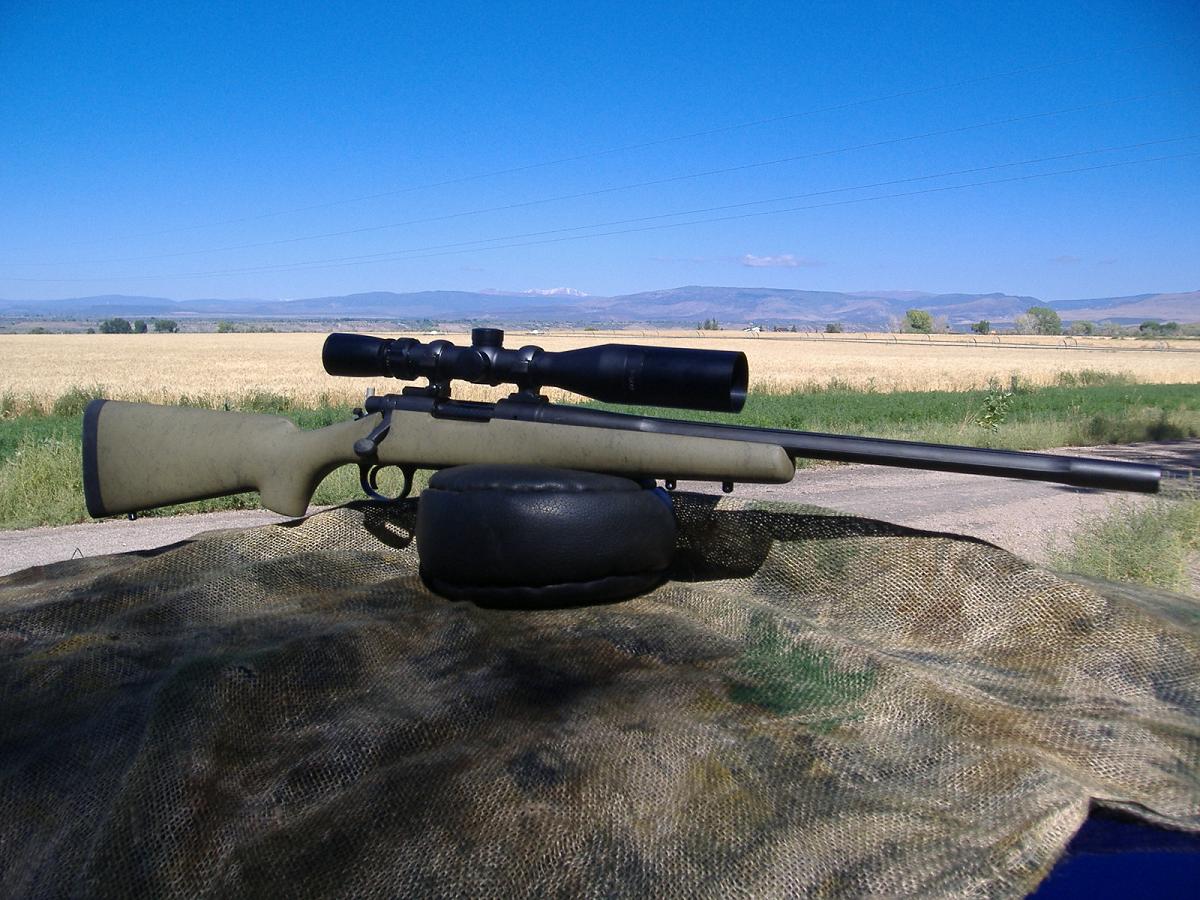
The Remington XCR Compact Tactical performed very well… but it wasn’t perfect. First thing I had to get done was to build up a check rest. This allowed me to be more consistent with my positioning. I had a hard time loading the 4th round in the magazine. Sometimes it would load #4 with no problem, other times, it would jam it up and you would have to dump all the rounds. The good trigger got better as the class went on.

The PFI RR800-1 scope was brilliant. I really like this scope, and I really like this rifle/scope combination. The accuracy potential is impressive. The yardage marks in the scope made hitting much easier. You still have to find your range, calculate your wind… and your scope will tell you where to hold for the shot. Because you zero this scope for 100 yards, and the one hundred yard line is so high, it is a little different holding the gun on that mark… you naturally want to hold for 400 yards, the center of the reticle. But don’t do it… hold where PFI suggests and you will be DNO… Dead Nuts On. That is, you will be DNO if you bring ammunition that falls within PFI’s suggested performance range. Unfortunately I brought the wrong ammo for the task at hand. I brought with me Winchester Super-X 150 grain cartridges. Here is what I learned. The rate of twist is not good for 150 grainers and Winchester Super-X loads are inconsistently loaded. This is a statement that I make in the same tone as saying getting kicked in the balls hurt. It’s not just obvious, to you, but it’s obvious to all those around you. The ballistic coefficient of these soft points are horrible. They have roughly the same drag as a Pontiac Aztec with the parking brake on. They bleed energy to the point that after about 500 yards, the bullets hardly any mark on the steel plates we were shooting at. You will want to use heavier bullets, and you will want those loads to be Match Grade… regardless of weapon or caliber. If you can’t get Match ammunition, get the next best thing…. and by that I mean not ammunition from Remington or any Winchester White or Silver boxes. Get Hornady. If not Hornady TAP, then Hornady Custom. If you can’t get Hornady, then Black Hills. If you can’t get Black Hills, then get Federal Premium or Federal Fusion. These rounds have higher BC’s than others, and more importantly are loaded more consistently. Don’t skimp on your ammo, get the best you can. Not just that, but get a lot of it. I went through damn near 400 rounds. That’s a lot. If you reload, pay extra attention to your loading and craft each cartridge with the utmost attention to detail, using the best components… and make sure they work in your set up.

While, the ammunition that I used was different from PFI’s suggestion, The PFI scope worked quite well. At 100 yards, I zeroed for the 100 yard mark. At 200 yards, the scope was DNO. At 300 yards, this is where the ballistics departed from PFI’s ranges and to hit at 300 I held for 250 yards. So I found my Dope for 300. I wrote that down in my data book.
Did I mention your data book? Bring a new one to this class… and consider starting from scratch if you already have one you are working on. Because the cats at LRI are going to give you more information that you are going to want to track. Go to staples and get a small spiral bound note pad, a good pen, and a mechanical pencil for drawing range cards.

LRI showed us a few interesting things. One being, scope failures. We had a number of scopes shit the bed at the LRI course. We had a Burris crap out on one individual. We had two Leupold Mk IV Tacticals go down. I had a Leupold Vari-X III fail me… luckily it was zeroed when it stopped adjusting so it’s stuck… but where I needed it anyways. So I’ll deal with that later. Does this mean Burris and Leupold scopes wont hold up? Not hardly. Anecdotal evidence is just observations regarding one scope on one gun and you don’t know what may have happened to the scope before the failure. I have seen these scopes on other guns go through hell and back. Eventually, every scope will fail. That’s just going to happen. It’s only a matter of time. My Vari-X III is an ancient early example of the breed. It’s been fired more than any scope should have to endure.. and it’s still shooting. Hell, I killed 4 prairie dogs with it on my lunch break after I zeroed another gun. One thing that can lead to an early failure of a scope, is improperly mounting. The rings and scope have to be aligned perfectly or you get uneven pressure and stress through the tube. There are lots of very subtle factors at play here… but they amplify each other during recoil. Another thing that can lead to a failure is environmental stresses. Are you leaving your scoped rifle in your trunk during the heat of the day, then shooting the hell out of it? Do you thing that scope will live a long life like that? We can’t control the process of manufacture or the quality control that went in to your individual scope… but we can control how we treat it. Your scoped rifle is a precision instrument… you have to treat it as such.

 

Pride and Fowler Scopes.

Pride and Fowler Scopes.

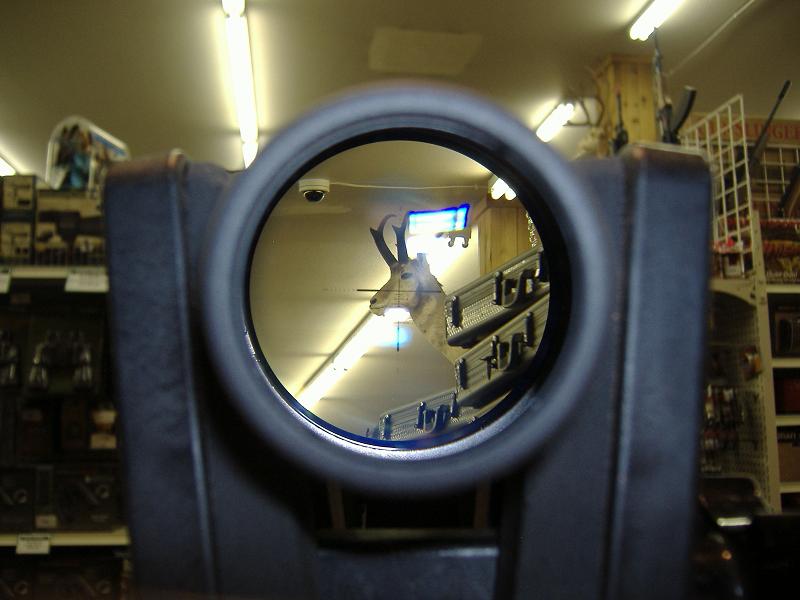
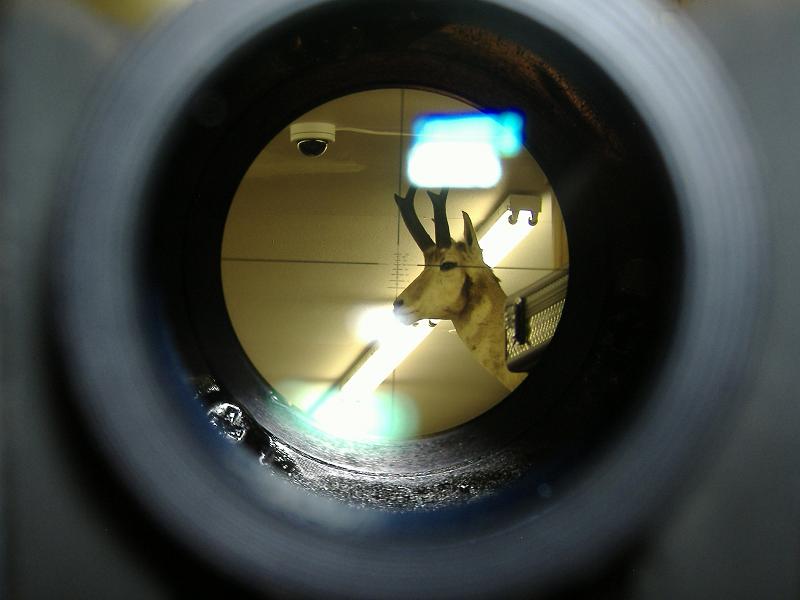
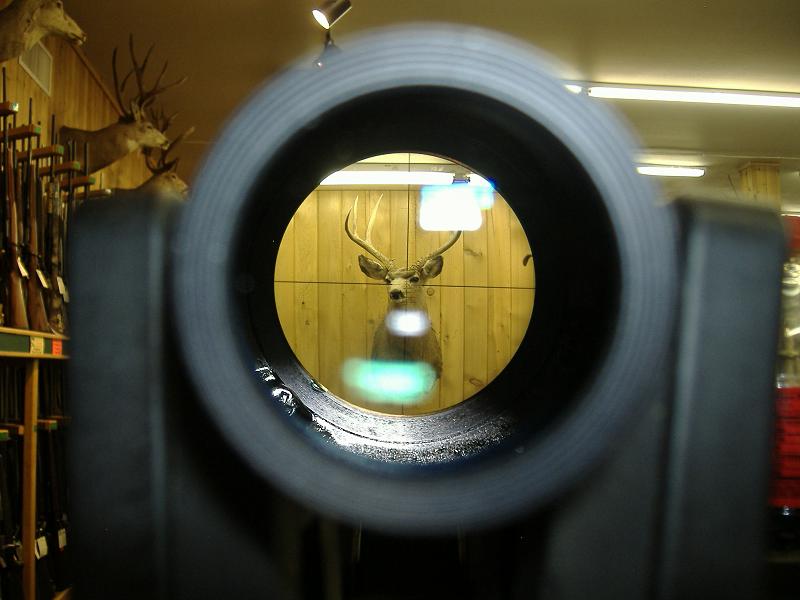
PFI has sent us a couple rifle scopes.   Looking through the PFI RR800-1 – right next to the Zeiss 3.5-10 Conquest… Brighter? The Zeiss is a little bit brighter.  I’ll give it that, but not by much.

This is the Zeiss.  1 inch tube, second focal plain etched reticle.  It’s a good scope and it works very well.  Clear? The PFI unit is just as clear. Crisp sharp contrast… this is great glass.  It uses a 30MM tube which allows for a naturally sharp image because you are not bending the light as much to force it through the smaller tube.  

I tried to take the photos as carefully as possible to make the images look as close to each other as I could.  You will notice that on the same power settings, the PFI does bring the target in closer.  If you zero the Zeiss at one power setting, and then change the power setting, the ballistic marks are going to mean different things.  This is the problem with ballistic reticles in scopes that use a second focal plain reticle.  You have to either use them at the max setting or at a factory specified… usually 10 power if it isn’t at max.   The First Focal Plain reticle, or “FFP” is a big advantage for the PFI over the Zeiss.


Notice the reticle zooms as the scope zooms. 

This allows the reticle to maintain proper relation to the target and allows the ballistic plex to be used regardless of power setting.  HUGE advantage in the field, I can’t stress this enough.  You could be overwatching a field of fire and you need to look at something that is close up, or you need a wider field of view… so you back the power down.  Or you need to zoom in to something to get a closer look, so you crank the power up… Well, the PFI scope is accurate whereever you have it.

Now I also noticed something… as I mentioned before… see the 3.5-10 Zeiss is no advantage over the PFI’s 3-9. Because when I set them both to 4 power, I had to bring the Zeiss almost up to 5 power to get it to magnify at the same level as the PFI. So really they are about the same level regardless of what the dial is indicating. 

The Zeiss had a better eye relief by about a half inch – but this is not a problem considering these are mostly going on .308s and the like… not .300 Win Mags. Recoil isn’t going to cause the scope to kiss you… because there just isn’t enough of it.  PFI is working on a Magnum scope for magnum velocities and trajectories… but it isn’t out yet.  Soon.

Now the biggest difference… The PFI is $595. The Zeiss is $725. That $130 difference… I really don’t see 130 dollars worth of difference to get the Zeiss here. Especially since the Zeiss’s reticle can only be used properly at full magnification.  Being completely objective – The PFI wins. And I’m saying that even though I’m a huge- HUGE Zeiss fan. This is not what I was expecting. 

Now, you guys know I had to buy a whole new rifle because I liked this PFI scope so much.    I picked a Remington 700 XCR Compact Tactical rifle in .308.   Not only did I buy that rifle just for this scope, but I took this combination to LRI, for some advanced training.  You can read about that here.  To sum it up, the PFI system is a true winner, and I’m completely sold on it.

Now that I am a dealer, it is my pleasure to offer these outstanding scopes to you guys.


Charles Daly D-M4EL Carbine.

Charles Daly D-M4EL Carbine.

(For the photos and videos related to this article, check them out as originally published on Old Mad Ogre, HERE)

I have a friend named Bax. He’s a former Jarhead, opinionated, somewhat self-aggrandizing, but smart. He keeps me honest. Around me, it just seems the subject of AR-15 rifles just swirl like radioactive fallout in a breeze. This dust is of my own making, as I nuked the AR-15 platform in one of my articles. While it is true that I do hate the AR-15 for many reasons, I also love it for many others. There are strong points in its favor and I have some AR-15’s for those reasons.

In the middle of yet another AR-15 discussion on WeTheArmed.com, the subject of Charles Daly came up. I dismissed Charles Daly off hand because of previous experiences with CD products that left me disappointed. I generally operate on the Fool Me Once principle, so I had no interest in exploring another CD product.

Bax however, was insistent and somehow got Charles Daly involved. Mr. Kassnar himself, President of Charles Daly stepped up and offered a CD rifle for defense. To clarify, Charles Daly’s Defense division, CDD has the AR line, and it was a CDD rifle that was send to me. A straight forward M-4 clone, no frills. On the CDD web page, it’s the second one from the top.

The Specs. Item No.: CCDM4E16. 5.56mm Nato, 16” Barrel, 1×7 ROT, MSRP $1309.00USD. Flat top, with removable carry handle. Fixed front sight. 6 position collapsible stock. Chrome lined 4150 barrel, M-4 feed ramps, M-4 fore end.

When the rifle came, I was expecting it to be at the Bushmaster/Armalite level, meaning typically Milspec and rough. But I was pleased to see that it was much better than that. I am a critic by nature, and if there is something to criticize, I am inclined to do that. I was batter up at the plate ready to swing and knock this rifle over Bax’s head. I felt deflated. It looked good. It felt good. It didn’t have any “cheap gun” rattles. It didn’t have a grind in the action like cheaper AR rifles do.

In fact, it looked just like a Rock River. I had a Rock River on hand in the exact same set up, so I compared them side to side. It was like I was looking at twins.  However the Charles Daly had an advantage.  The gas key on the bolt carrier is staked securely while the Rock River was not.  This is an important detail for a heavy duty use gun.  Other than that, they were virtually identical. 

Well, not quite.  The CD gun was better looking. The exterior finish was cleaner, blacker, and smoother. It honestly looked better. Felt better to.

I had to shoot it. We had got in some new optical gunsights. One is called the ISM-V from Insight Technologies. It had to be tested out too, so this looked like a good match up. I mounted the optic, gave it a quick bore sight and hit the range.

Because most of the interest in this gun was from online sources, I wanted to break away from normal article tradition, and take some video to post on YouTube.

The first time out with the CDD, I noticed the only real complaint that I could find. The trigger was typical MilSpec. This means it was a touch heavy in the second stage with a little creep and a little grit. Not bad, just completely average. No better and no worse than any other trigger for this type of rifle at this price range. We didn’t have much time, but Marcus, a co-worker and I blasted through a couple mag fulls. The gun shot quite well and was easy to hit with… typical of the AR type. Nothing out of the ordinary and we experienced no jams. And this was just right out of the box. Box to Range. No cleaning or lube.

ROUND COUNT: 150.

To do this right and to give this gun a fair shake, I had to give it a cleaning and while doing so, examine the internal parts. The internals looked as good as the externals. No shortcuts, no hidden problems or skeletons. Just good quality parts that were built right.

I cleaned the weapon using a new CLP product branded by Smith & Wesson, made sure every part was properly lubed, and reassembled it. This was the only cleaning I did on the gun until the completion of the evaluation. However I did lube it along the way, using Tetra Gun Oil on the bolt and bolt carrier. That was it.

ROUND COUNT: 560

Not wanting to review the optic and focus just on the gun, all subsequent shooting was done with the gun’s carry handle attached and just used the iron sights. However it must be said that this ISM-V is a great choice for a combat red dot type sight. It co-witnessed with the front sight perfectly and allowed you to use the optic as a ghost ring sight for fast close range shooting.

Extending the shooting range further and you can use the optic as advertised. The accuracy was exceptional. Very consistent. As was the ejection. Unlike most AR-s, the CDD spit out all the brass in about a 4 foot area. Better than the typical 8 foot area of most AR builds.

ROUND COUNT: 880… no video.

One of the things I am interested in when it comes to weapon, is can they actually be applied to work.  I have to tell you… yes.  Since I don’t have a supply of Iraqi Insurgents to deal with, I have to find an alternative.  We do have coyotes out here and I was able to test the CDD rifle on a couple of them.  From the back of the truck into firing position, the CDD performed well.  From spotting 3 coyotes, I was able to put 2 of them down cleanly and quickly.

I did have one failure with the rifle, and I’m going to take that on the chin and admit it was Operator Error. I didn’t have the magazine seated properly, so when the weapon fired the first round, the magazine fell so it couldn’t feed the next one. That was my fault, and not the weapon’s. That being said, the functioning of the gun has been flawless. Again, this is something I was not expecting and was even hoping it would be otherwise.

When I benched the rifle, it was a very cold day. Not quite warm enough to keep me from shivering slightly. But it was still accurate enough to shoot under an inch. Open sights on a frosty, foggy day when I couldn’t even see the target clearly through the fog – I’ll take that accuracy happily. I bet on a warm clear day, that group could have been shrunk by half.

ROUND COUNT:  1000

I’m giving this rifle a 9 out of 10. It loses points for the trigger, but everything else was solid.

Next time, Bax.  You are buying the ammo.

For article discussion relating to this rifle, see the thread on WTA.

Thank you to Mr. Kassnar of Charles Daly. 

The SIG GSR 1911 C3:

The SIG GSR 1911 C3:


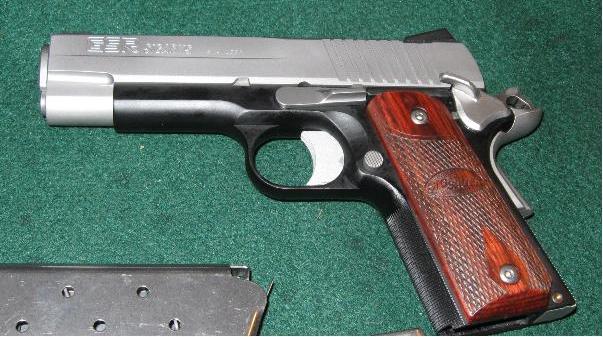
What can I say? I had to have it when I first saw it and I’ve been working on getting one for a long time… today was the day it came home with me. Sexy little minx, the C3. The C3 is SIG’s answer to the CCW question. Colt used to make a pistol called the CCO, a gun that I have always wanted since I first saw it. Then Colt dropped it because Colt is run by a pack of useless idiots with balls slightly smaller than your average sun-dried raisins. Well, SIG, being smarter than the average bear, is making their own flavor of the CCO concept. Commander length barrel on top of an Officers sized frame. This is, and I am not saying this lightly – the PERFECT concealed carry combination.

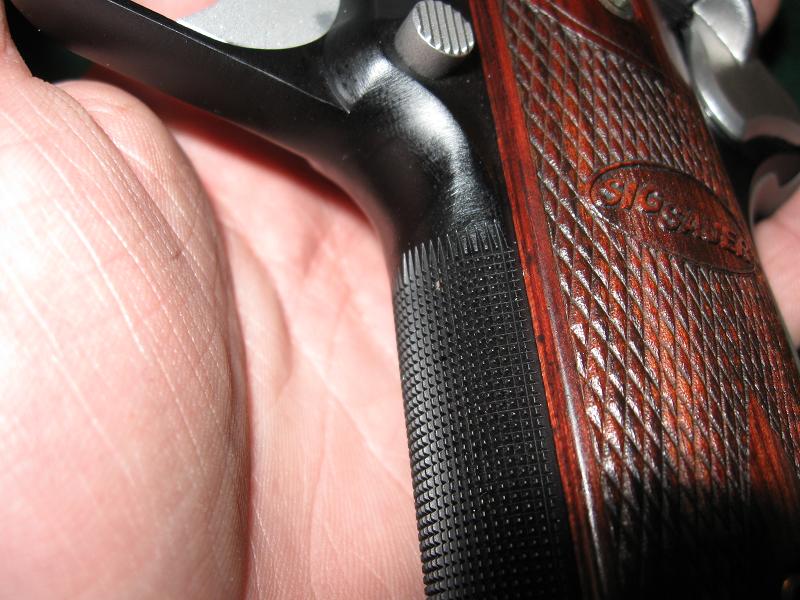
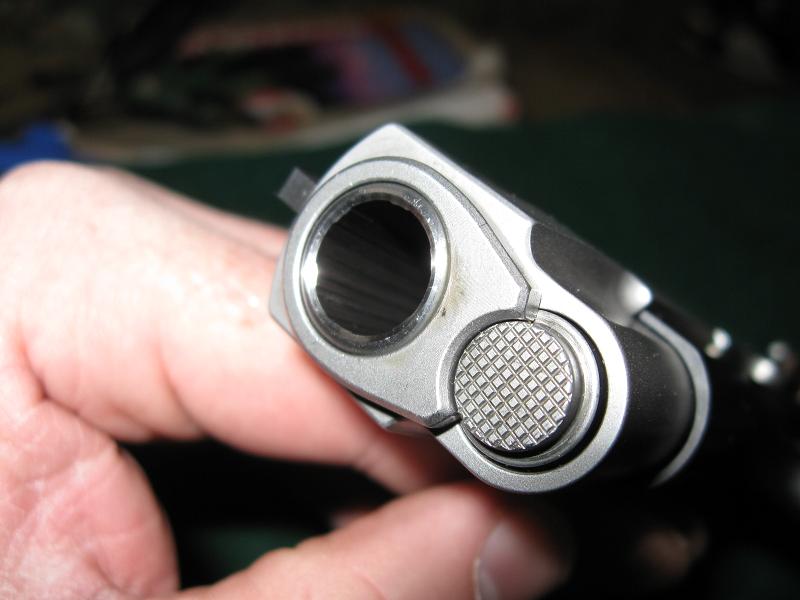
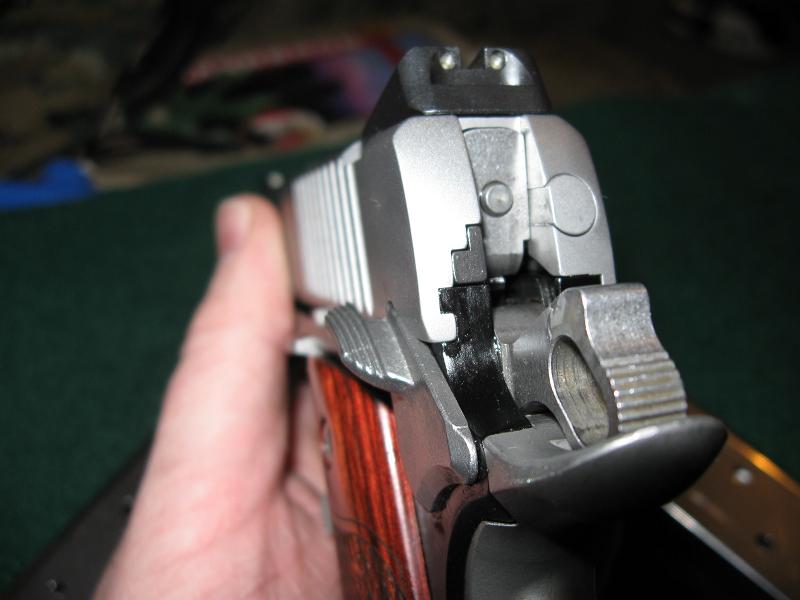
You know how I’ve said that Kimber makes “one of the best” production 1911’s out there? Yeah, well SIG is the other part of that equation and they do make The Best production 1911 out there. I’d like to see some top gunsmiths make some top end customs based on the SIG GSR’s. In the photos, take a close look at the frame to slide fit. No, scratch that… Go to a stocking SIG dealer and look for yourself with your own eyes. To get better than that, you are going to have to buy a full house custom built gun for at least double the money… and even then I really don’t think you can get better than that. Not when you are talking Stainless and Aluminum… now if you were doing a solid steel gun with the same steel on the frame and the slide – maybe it might look tighter, but you can’t actually make it any tighter. There is ZERO play in this C3’s frame to slide fit. There is no play in the barrel.

Kimber still makes some great handguns, don’t get me wrong. I’m still a huge fan of Kimber’s Tactical series. But SIG’s GSR’s? They’ve taken it up a notch. The reason I got the C3 was that I wanted a good compact 1911, but I wasn’t quite sold on the Ultras… It’s the Bushingless Bull Barrel that turned me off. The C3 has a Bushing. It has a GI type follower… no full length guide rods… no paper clips required to take it down… no gimicks or bullshit… just a solid 1911 the way John Moses Browning would have approved of. Say hello to my new daily carry gun. To get better than this – I’d have to buy a Wilson Combat or a Nighthawk Custom.

Shooting the C3, I couldn’t be happier. It’s A+ on the Accuracy Score. Even out to 50 yards, it was precise. Reliability is exactly what you come to expect with SIG, meaning it was flawless. Yeah, you can say I’m a hard core SIG fanboy now. So what do I think is better, the SIG or the Kimber? Read this post again. The SIG’s don’t use plastic mainspring houses, let’s just leave it at that.


The Zen Of Handgunning

The biggest mistake novice pistoleros make is a simple matter of forgetting the basic fundamental skills. For some reason, they can tell you what it takes to shoot, but when they draw the weapon, it all goes out the window. For me, the biggest reason I enjoy handgun shooting is that it is more of a challenge. What makes it challenging is that handgunning is a whole person event. You can’t half-ass a pistol shot. It takes a combination of body and mind and an almost zen-like “one-ness” with your handgun to make those pistol shots consistent. And it all starts from the ground up.


The Stance, is something continually harped on by martial artists… placement of your feet, your balance on your feet… there is a reason serious martial artists harp on this so much. Everything is build off that foundation. For handgunning, it is the same. We are not tensing up to throw round-house kicks, but we are getting ready to take some recoil and to possibly make movement. But since we are not about to Chuck Norris anything, our feet should be shoulder width apart, nice and comfortable, knees unlocked and just slightly bent, and our weight just a bit forward… on the balls of the feet not the heels.

Going along with the stance is a huge debate in the Gunner’s Community about Weaver vs Isosceles… the correct answer is the same answer as “Mary Anne or Ginger?” The answer is “Both”. We should learn to use both and to transition seamlessly between the two. Which one we use and when all depends on the situation. If I am in an Interview Position, where I am talking to someone who I am not clear on the identity or Intent of the person – I stand with my weapon side away from that person. This puts me into the Weaver position. Should I be facing a potential threat and I’m wearing armor – I want as much of that armor facing the threat as possible so I’ll be set up for an Isosceles position. And you can’t say “I only use Weaver and nothing else” Well, that’s just stupid because in real life, target engagements do not happen in static positions like they do on the range. Say, I’m facing a target and it starts moving from my left to my right – and I track that target with my weapon, I am swinging through Weaver into Isosceles. Say that target goes from straight in front of my Weaver position and breaks to my left – then I bring my right foot forward and I am now into the Isosceles again. So train with both, because in reality, you will need both.

Get a grip: It’s almost scary when I hand a person at the gun counter a pistol and I watch them take up their grip on the gun… it’s really easy to spot the Ignorant and the Novice and the Braggarts and who is an experienced shooter. Women make the biggest mistakes in the grip department. The Ladies will often grab the grip very low, putting all fingers on the grip under the trigger guard, leaving almost an inch or more between their hand and the beavertail or base area of the pistol. This is the “I’ve never shot a gun before in my life” grip. I especially find it amusing when the guy gripping the pistol like that has made claims to being Super Secret Squirrels in the military. Uh huh. The other common problem grip is the Revolver Grip. This is where the Support Hand’s Thumb goes across the top of the firing hand, behind the pistol. This might be okay with a Revolver, and maybe that’s how you’ve done it all your life. But now days when you do that, you run the risk of the slide hitting your thumb and causing you some sudden discomfort and or lacerations. The grip should start out with the firing hand with the pistol inline with the bone of the forearm. This grip should be up as high on the gun as possible, to put the bore axis as low as possible. The support hand then wraps around the firing hand fingers, anchoring the pistol in a vice, with both thumbs together and if possible, pointing forward. The trigger finger is up along the frame of he pistol when the pistol is not aimed at the target. A good grip is critical because because a handgun does two things during firing. One is the recoil is going to make the gun kick back and up. Torque is going to want to make the gun twist. You can Recoil from the mass of the bullet and the pressure of the charge sending that bullet out of the gun and down range. You get torque because the barrel has rifling in it to impart spin on the bullet. A good grip controls Torque and Recoil and minimizes their disturbance.

The Sight Picture. Often I ask the students what they are looking at and what their sight picture looks like. I get some strange answers. First off, the Sight Alignment, how you should align the sights. Take a look at this simple Paintbrush rendering of a sight picture.

When we are shooting target sights, we use the sights with the top of the center post even with the rear sights and we center that across the equator of our target, ( a center hold) or we put the target on top of the center post, (a 6 O’clock hold) which is the least ideal sight picture one can have in my opinion. Now, for Defensive or Tactical shooting, we use just the Dots. Line up the dots, and put that dot on the center of the target as shown in the little .gif image. The Sights and the Target together make the Sight Picture. Now how do we look at the Sight Picture? Our eyes are trying to focus on 3 things at once… something that they are not able to do. So where are we looking at? Our eyes should take a sharp focus on just one thing… the Front Sight Post. In an engagement, we are looking at the target, first and always… When a threat is identified, we bring the weapon up into the eye level and we are now looking at a sight picture. From here, shift your eye’s focus to the Front Sight Post and apply pressure to the trigger. Simple as that. Don’t over-think this. You don’t have time. Place the Dot, and Place the Shot. Nothing else is important to look at.

The Trigger: Triggers get a lot of abuse… They get jerked and slapped and crushed just beaten on all the time. You can do everything right, and ruin the shot with even a slight case of trigger abuse. When you pull the trigger, do so with a steady pressure until the trigger breaks and the weapon is fired. To do this right, in a way that is consistent, it requires practice in large quantities. That means Dry-Fire Practice. So get some snap-caps and get to work. If you are using a pistol with a round barrel, balance a coin on it. You should be able to dry-fire the weapon without the coin falling. I like to use a laser to practice this as well. If you have a laser mounted to the weapon in the guide rod or the grip or wherever – great. You can activate the laser and dry-fire with it. The laser will clearly show you what you are doing wrong. If you do not have a laser, you can buy a cheap laser pointer for a couple of bucks. Many of these are the diameter of a pen. You can put the laser pointer in the barrel. It doesn’t have to line up with the sights. You are not aiming with it. But it will still show you what is happening. The laser should not move when you dry-fire the gun. Now, it’s important to practice dry-firing just as you would with live ammo. Important to note – Do not Dry-Fire any Rim-Fire type firearm without the use of a Snap-Cap. Most of the time with the laser, you will see the dot jump to the right. This is sometimes caused by a bad placement of the finger on the trigger. Use the Pad of the trigger finger, not the knuckle. The pull should be straight in line with the trigger’s arc of motion. Some triggers have Over Travel. This means the trigger breaks and fires before the trigger has moved all the way back… this allows the trigger to jump that last distance and smack the back-wall of the pull and this could throw the shot off. Over Travel can sometimes be remedied by the user, or sometimes it needs a Gun Smith to sort it. The trigger can be gritty, or heavy, or it could stack. Stacking is where the trigger pull gets heavier just before it breaks. There is a lot that can be wrong with the trigger pull’s qualities… but almost all of them can be overcome with lots of dry-firing practice. Okay, now that you have the trigger pulled back, and the weapon is fired – keep the finger on the trigger. Almost all Novice shooters instantly at the firing – take their finger off the trigger completely. Then they start all over again. This isn’t good. This leads to Trigger Abuse. Don’t beat your trigger. When you break the shot, keep your finger on the trigger. If you have a rifle, pistol, revolver, shotgun… take a moment there at the back wall. This is a part of Follow Through. Don’t let up off the trigger until the Front Sight is back on the target. Let the trigger forward slowly. You will feel the trigger reach a point before it’s all the way forward where it clicks. That’s the reset. As soon as it resets, start pulling it back again for your second shot and then so on.

Training Scars: There are tons of Training Scars out there, too many to deal with. But I’m going to talk about two of them. A Training Scar is any Bad Habit you have picked up that needs to be worked out. If you have Training Scars, the best thing to do is to get with a serious Firearms Trainer to work with you. Your shooting buddy doesn’t qualify. In fact, that could be one of the reasons you have Training Scars. Find a real Trainer who can watch you and see what you are doing wrong so he can help you do what is right. Anticipation can be fun and can sweeten the moment. Like when your lover comes out wearing some sort of sexy candy wrapper (what you tear off before consuming) that is some excellent anticipation. For those to young to know what I mean, think about Christmas Morning before Mom lets you open those presents. Or if your Extreme-Muslim – that moment just before Akmed pushes that button to detonate that vest you made for him. Those are examples of Anticipation. In shooting, Anticipation is a bad thing. Don’t anticipate Recoil. This leads to an instant before firing where you actually push the gun. Even just slightly… this can throw your shot off. Anticipation’s Best Friend is Flinch. Flinching is bad, because you can do all kinds of jacked up things including actually closing your eyes just before firing. Look, it’s a simple as this… you can’t hit the target if your not even looking at the thing. You are also legally liable for every round that you launch… so it would be in your best interest to keep your bloody eyes open, okay? Now, if you have Flinch it’s going to take a lot of training to get it out of you. The best way to get rid of flinch is to take your shooting back to Square One. Get out the old .22 pistol or even an Air Gun. (Airsoft isn’t accurate enough to really see what you are doing) Start shooting those low recoil guns, use the laser, and dry fire a lot to work out any sign of Flinching.

Rethinking the Glocks: The Model 23 RTF2.

I knew I was going to catch some flak from my 1911 Brothers out there for selecting, of all guns, the Glock in a .40. The Anti-1911. You wouldn’t believe the amount of flak I’m catching from work! They have been merciless. Let’s just say I don’t work at a Glock Shop. Guys, I am not turning my back on the 1911. I am still a 1911 Guy. But before I am a 1911 Guy, I’m a Gun Guy… which means I like guns… all guns.

The Glock’s biggest criticism is that it’s ugly. Many owners think it beautiful. Regarding the Glock’s beauty. I’ll be the first to say… it’s not Pretty. However the Function of it is what can make a Glock absolutely gorgeous. The low bore axis helps reduce muzzle flip. Combine that with that funky grip angle that helps return the gun to point of aim faster… now lets add in what really is a fine trigger pull… consistent and the same every time… with a super short Trigger Reset… And it’s simple. Nothing complicated. Nothing “trick”. It’s about as straight forward of a mechanism as it gets. The Glock really is the whole enchilada when it comes to Function. That’s why I am going to give the Glock another chance. I didn’t contact Glock for a Review gun, I ordered one for my own outright purchase.

When my Glock 23 arrived, I took off my SIG P229R and picked up the Glock. I had to carry it. I loaded it up with some 165 grain PDX1’s from my SIG Mags, and tucked it in. I know I usually advocate the test firing of your carry gun with your choice of carry ammo, but in this case, I had no concerns. There are 3 lines of guns have always felt comfortable with right out of the box. HK’s, SIG 22X series, and of course, Glock. See, I’ve owned a Glock before. A Gen1 17. I’ve been to this rodeo before… I know the Glock well enough and have always respected it’s reliability.

I dismissed them when the Gen2 came out, and I’ve not paid any attention to them since. They just didn’t feel right in my hand. The RTF2 grip feels much better to me, I don’t know why. I started looking at the Glocks again when we got in a 17RTF2 and I thought, “You know, this isn’t bad at all.” I’ve got friends who are into Glocks and they all kept recommending them. A lot of guys I respect recommended them. LittleLebowksi from WeTheArmed.com is one of them, but the kicker came Las Vegas. At SHOT Show, my friend Mark Walters and I sat down at Ceaser’s Palace and we had a good conversation. During which Mark gave good testimony about his favorite gun, the Glock 23. It was a convincing argument. I promised I’d give Glock a second look. So I did.

I borrowed a Glock 17 and shot several magazines through it. After a few mags I got used to the grip angle. It shot just as I expected it would. Reliable and predictably accurate. I had no problem with it. However I’m just not all that interested in a 9mm. I’ve become reacquainted with the .40, a caliber I used to stake my life on back in Virginia. My 229 is incredible with the .40 when it comes to shootability, but it’s heavy. When I carry I do the “AllDamnDay” Carry and that usually means from 6AM to 10PM. That’s a long time to have a Heater strapped on. As much as love the SIG P229… and I really do… I want (no, not need… just want) a lighter gun for all day carry. A mid-sized gun, not a compact, not a mouse gun for pocket carry… a Mid sized gun in a mid sized caliber. From Glock that means Mark’s beloved model 23. The balance of form, function and firepower is just perfect for what I was looking for. The Glock 23 is just “it”.

The RTF2 grip texture is said to be too rough, but it does perfectly what it was designed to do. Lock the gun into your hand so it wont slip. Oh, it does that. But it isn’t “Fabric Friendly” so you gotta watch what you wear over it, and you sure as hell want to wear something under it… it can be… abrasive. But when you draw the gun, and it’s in your hand. It’s going nowhere.

The large Tritium front sight post of these Warren Tacticals.

The trigger is one of the things that Glock Owners like to brag about. It’s worth bragging on, because it’s pretty dang good. The pull is consistent, shot to shot. But the trigger reset is what really sets it apart. The distance which you let the trigger move forward, to where it resets so you can fire it again… very short in the Glock. One of the shortest, if not the shortest resets on the market. What this does for the shooter is to allow that trigger to be run quickly and efficiently… which makes for fast and accurate shooting. Something Glocks are very good at. When I roll into an IDPA match, I note who’s shooting Glocks. More and more frequently it’s the guys with those Glocks that are on the tops of the Leader Boards.

ADAMS HOLSTERS
Accuracy? That goes without saying. Glocks are going to just as accurate as any other service auto. And when it comes to practical accuracy, they can be even more so. From the holster to putting rounds into the target, they are just as fast as the classic old 1911 while shooting groups that rival John M Browning’s Masterpiece. This is why so many Law Enforcement Agencies have adopted Glocks. Combine this accuracy, the utter reliability, and the simplicity of the Glock system, you have something a Department can issue to all its officers with little more training necessary than with a service revolver. Many departments have reported improvements in qualification scores overall after a Glock adoption.

Does this mean I have gone over to “The Dark Side”? Why, yes, I think it does..

S&W Bodyguard .380

It’s been some time since my last article for Concealed Carry Magazine. I’ve been meaning to write one sooner, but to be perfectly honest, most of the new concealable handguns that have been coming out have just not sparked much of an interest in me. I’ve been bored with most of the options out there and no one wanted another Compact 1911 article. Most of this time off I’ve been packing SIG C3’s and 229’s and all year I’ve been packing a G23-RTF2 and that has all been from Mark Walter’s bad influence on me.

At SHOT 2010 I trudged through the show looking for something that peaked my interest enough to review. As I looked at all the new guns on the market, I really struggled with the malaise that’s been plaguing me when it comes to small handguns. That was until I walked into the S&W booth. They showed me their new Bodyguard BG380. Instantly my Spock Eyebrow went up. What’s this? A little auto pistol that I want to go shoot? Since Kahr hasn’t come out with a 10mm MK10 pistol, this would do.

While the BG380 is the same size as the other pocket .380’s that have dominated CCW handgun sales for the last two years, the new Smith is different. The difference comes from the whole feel of the gun. It’s as if S&W took an M&P pistol over to Walt Disney and put it in their “Honey, I shrunk the thing” machine. Normally when you shrink something, you lose a lot of qualities other than just size and weight… much like the Doberman Pincer shrunk to Toy Pincer size gives you a twitchy, fickle, and delicate thing. These Micro M&P’s are just as serviceable and snarly as the original… just in pocket size.

The most unique feature of the BG380 is the in-frame laser module. Insight Technologies makes it for S&W and we’ve not seen anything similar out there. The Module, should it fail, is replaceable. It’s fairly bright, but not as cohesive as other laser aiming devices from other companies. This isn’t a problem as this pistol isn’t meant for any longer range shooting, but I would have liked a more powerful laser. If I was Crimson Trace or Viridian, I’d be working on my own module to drop into the Bodyguard. The limitation on power comes of course from the batteries, and having the batteries within the frame as they did it makes me scratch my head. You can only shove so much battery in there. I’d have rather engineered the weapon to carry the batteries in the floorplate of the magazine and had power contacts on the sides of the magazine body. Dewalt knows how to do this, it wouldn’t be hard and they would have been able to use more battery. More battery is a good thing.

Some shooters argue against lasers as unnecessary gadgets. It’s true that a laser isn’t a necessary thing, but any device that gives you any sort of an advantage in target engagement or intimidation is a huge benefit… especially with pocket sized guns. Another thing some guys claim, is that sights are unnecessary to such small guns. However I checked the law books and I didn’t find any exceptions to gun laws or liability of gun use for small guns. You launch a bullet out of a small gun, you are just as liable for where it goes. And for a pocket gun with the purpose of defensive use, that bullet needs to go exactly where it will do the most work. Shot Placement is even more critical in small defensive guns.

The pistol its self is just the platform from which the projectile is launched… and the BG380 gives you a small, concealable platform that you can have on you at all times, or just when greater discretion is required. The only thing one is giving up with the BG380 is power. I can’t let this review go by without mentioning that I consider the .380 Auto round to be the minimum cartridge which I deem as acceptable for defense. It falls someplace in the Force Continuum between “Harsh Language” and 9mm. I would only use it when guns of greater caliber are not an option. While I am not a huge fan of the .380 auto, I must admit to being a fan of the Bodyguard. It’s cool, it’s reliable, it works. It’s an absolute buy for those looking for a pocket pistol.

Ender’s Game

The movie was fantastic.   I read the book when I was young, and my sons have as well.  We were not disappointed.  We all enjoyed it a great deal.
Well acted, well directed, good casting, and awesome effects.
The story is solid.  A good morality tale.

The ending of the conflict had an important dialog.  Normally I’d agree with Harrison Ford’s Character that Winning was all that mattered.  But Ender’s response that how they win is more important.  This is true in any War based on Political Agenda.  World Wars I and II were both Political Wars.  The Civil War and our Revolutionary War were Political Wars. In these, “How You Win” is critical.  Look at WWII specifically.  Germany and Japan, who were our biter enemies, quickly became our allies.  How You Win is what made the difference here.  Look at WWI, how the Allied nations in that case is what set the ball in motion to start WWII.  Many reasons for this, but allow me to oversimplify.  The Allies were poor Winners in that conflict.  Ender went the extreme route to Poor Winner, by the utter destruction and genocide of the enemy.

We see that pretty much as the goal of our Enemies now.  The extremist Muslims who vow extermination of everyone that is not Muslim.  As a result of these statements, a lot of guys I know have said the same thing in reverse… That we should exterminate the Muslims.  This is the wrong tact.  The wrong direction.  And it’s counter to our beliefs as Americans.  America is a Mixing Pot.

The talk of killing Muslims just because they are Muslims makes me ill and disappointed. We shall fight to defend, certainly. But only to defend. We kill only to protect. We do not engage because someone has a different belief system than our own. We do not shun someone because they come from a different corner of the world than our own ancestors who came here from a different corner of the world.

I enjoy Orson Scott Card’s works, and Ender’s Game was the first of his that I read.
I’ve had a few chances to meet OSC.  Sat in on a lecture on writing once.  Interesting fellow.  While I do not agree with him in certain political areas, I do like his work.

All New

What really bugs me about the Gun Industry is how they change one or two small details and act as if it’s something completely new.

Take a look at SIG Sauer.  They have the TACOPS 1911, which is a great gun.  They Cerakote it tan, change the grips, and all the sudden it’s a “Scorpion” and thus a completely different gun.  Some rifle makers will change the stock, and now it’s a completely different model.  For the most part, the gun is only cosmetically different.  Yet the gun companies wave flags of originality and claim innovation.  Look, if you are using off the shelf parts that have been on the market for over a year, you should not be allowed to use the word “Innovation” or anything in a thesaurus that is similar.   Worse yet, the Gun Writers out there who have to review these things.  Never mind that its the same damn gun with different cosmetics… these guys have to write another 2,000 words with photos on how this is something new and fresh.  And they publish those articles and people buy those magazines and it’s all just rehashed shit from 20 years ago.  I’m not naming names but I swear to the All Holy that I read the same rifle article 20 years as I just read in a new magazine 20 minutes ago, with the only difference being the freaking handguards.  Its the same thing.

christian_bale_as_bruce_wayne_and_batman__drawing__by_p_shdw-d665959

I was going to say Clark Kent and Superman, but I hate Superman… he’s a Douche.  But look at Bruce Wayne.  League of Shadows Ninja, and then changes costume to become Batman.  Really only cosmetically different.   Bruce Wayne could still kick your ass without the Dark Knight costume.  He doesn’t need the costume to perform.  And just because he is in the costume, doesn’t mean he’s suddenly a better fighter.  He’s no tougher, no stronger, or any smarter while in the bat-suit.
Who else does this a lot?  Kimber.  Freaking hell, they only make like 3 different 1911’s but given them different skin treatments and all the sudden you have guns from 699 all the way to 1400 without any special Custom Shop work… just cosmetics.
Poor Gun Review Writer.   This is one of the reasons I stopped writing gun reviews.  I got really jaded and sick of rewording the same review for the same gun that’s just had a small detail difference.
Kimber Custom II.  Kimber Target II.  Same flippin gun, just a different rear sight.  But according to Kimber, it’s a whole new model.
Now, I’m not busting Kimber’s nuts on this, or SIG’s… because so many other gun makers do it too… they all do it.  Accept for Taurus, who has so much CQ issues, everything they make is totally different.

Imagine if you will, if the Auto Industry worked in the same fashion?  This car is the same as that one, but this one has XM built in, so it’s a totally different car!  We call this one the Stallion, and this one the Tornado Hunter!  See, it has a pin stripe too.  (Well, they kind of do… looking at the Subaru and Toyota sports car, but that’s another subject)

No, people would not tolerate this in the auto industry.  Yet it’s SOP in the Gun Industry.  I like what the Car guys do those… They have Trim Levels.  Same car, with a series of steps in upgraded add on features that go from basic to fully loaded.
The Gun Industry should look at that model for awhile and think about it really hard.  Because right now it’s just ridiculous.

Now, I understand that a gun company needs to make new stuff to sell more stuff.  But I think these guys are going about it all wrong.  Let’s look at to examples.
Glock.  They make the same damn gun in 3 sizes in common calibers and that’s it.  That’s what they do… because they’re Glock.  The do what they do and they do it very well.  You don’t hear about quality control issues with Glock. You don’t hear about anything other than “It’s a Glock”. And they sell and sell and sell to the point that Glock’s Marketing effort is about like the Maytag Repairman’s schedule.  Because you know what you are getting with a Glock… Your getting a Glock.  Now look at SIG.  The P250 the P2022, the 229, 228 M11 226 MK25 and they are all different and you really don’t know what you are getting anymore with SIG or anything from SIG wearing that badge… I’m saying this because I love SIG and really I’m feeling like they have let me down.  Lost their way.  Looking more at Cosmetic Themes than keeping a tight ship… because I’ve seen some SIG’s with some serious issues that should not have been there.
Some guys have said they wished Glock was more colorful or fabulous like SIG is.  When really I’d like to see SIG act more like Glock.  The worst thing Glock stamps their name on is those disposable pens they give away.  SIG’s?  That could take all day talking about.  You don’t know what you are getting with SIG anymore and that’s a shame.


The Internet's Original Critic